Monday, August 10, 2026

Flirtup vs tinder.com: Full Comparison

Flirtup vs tinder.com: Full Comparison

So you're stuck between Flirtup and tinder.com, which usually means you're trying to figure out one thing: do you want casual and low-pressure, or do you want the big swipe-based machine everyone already knows? I've pulled in bumble.com, okcupid.com, and plentyoffish.com too, so you can size up the whole field before handing over your email anywhere.

Quick version. Flirtup is the pick for singles, couples, and LGBTQ+ users who want a casual-dating-first sign-up with broad options for how you define your relationship. Tinder's the pick if you just want the app everyone's heard of, with a giant user base behind it. Bumble makes sense if you specifically want the woman-messages-first thing or a friend-finding mode bolted onto your dating. OkCupid and PlentyOfFish might suit you too, but honestly, their current public sites didn't give me enough to say anything concrete. More on that mess later.
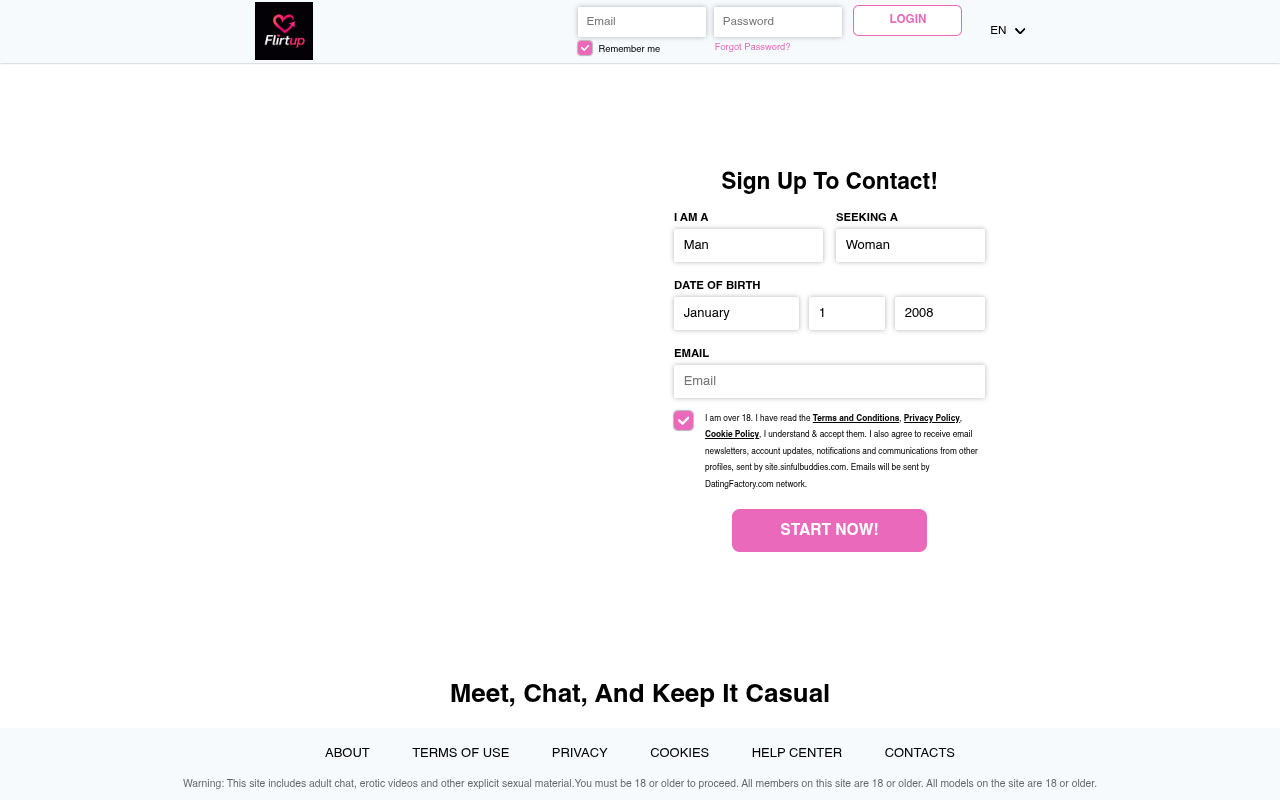
Flirtup website screenshot

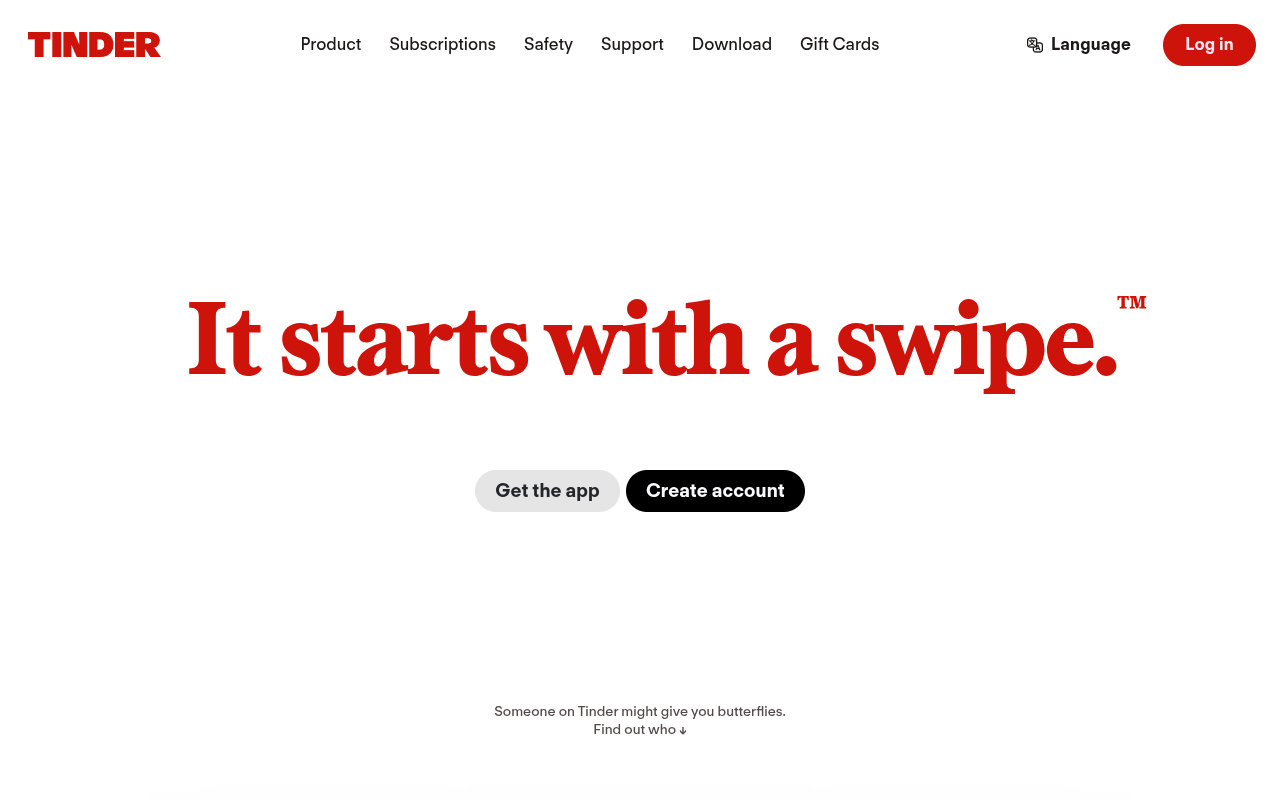
tinder.com website screenshot

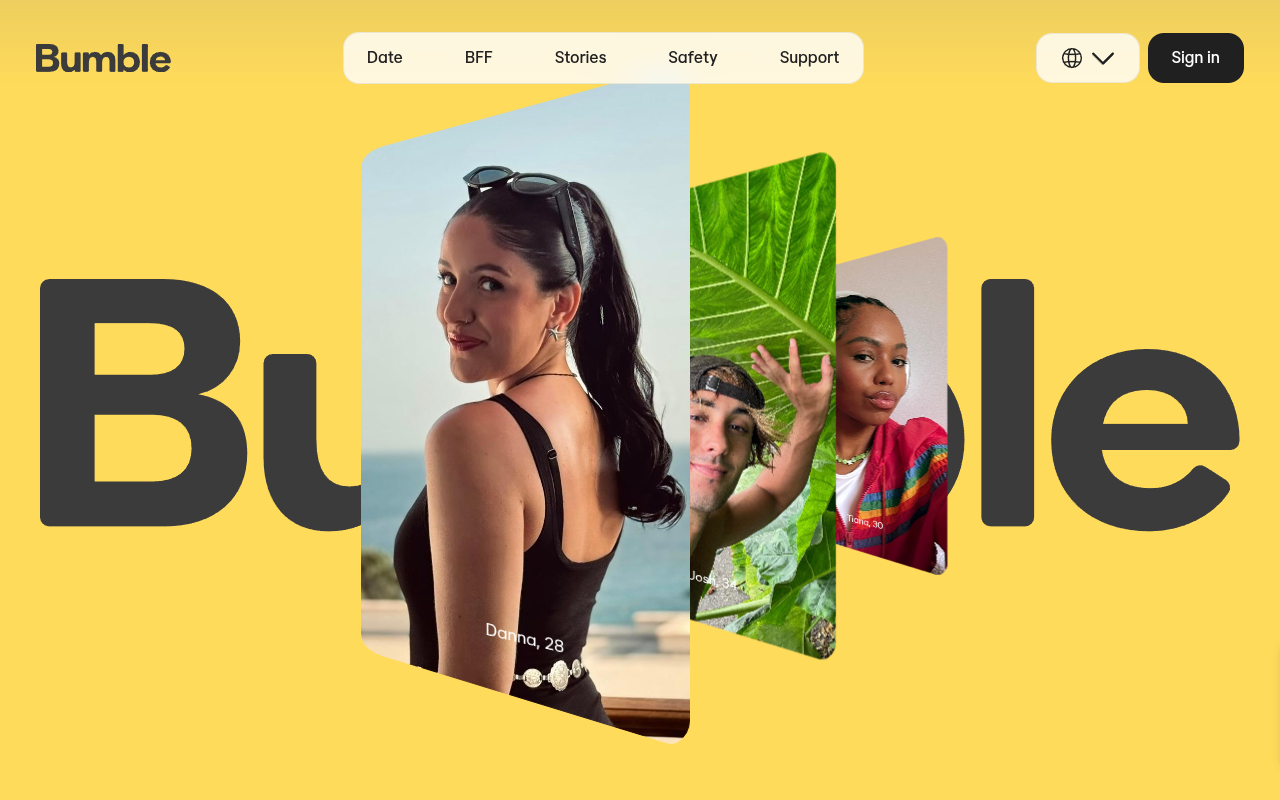
bumble.com website screenshot

Table of Contents


  • Quick Verdict
  • Flirtup vs tinder.com vs Bumble vs OkCupid vs PlentyOfFish: Comparison Table
  • Flirtup vs tinder.com: Sign-Up and Positioning
  • How Bumble Compares
  • What We Know (and Don't Know) About OkCupid
  • What We Know (and Don't Know) About PlentyOfFish
  • Pricing: What's Actually Stated
  • Inclusivity and Relationship Options
  • Which Should You Choose?
  • Flirtup Alternatives Worth Knowing
  • FAQ
  • Final Take

Quick Verdict

Want casual connections with explicit options for couples and transgender users baked into the sign-up? Flirtup is built for that from the very first screen. Want the name everyone recognizes, with a stated track record ("55 billion matches to date," per Tinder's own meta description)? Tinder's got the scale. Care about a woman-first messaging model or a built-in friend-finding mode (BFF)? Bumble spells both of those out right on its homepage.

As for OkCupid and PlentyOfFish, I just don't have enough verifiable detail from their current public pages to make a real claim either way. And that gap itself tells you something if you're deciding where to spend your research time.

Flirtup vs tinder.com vs Bumble vs OkCupid vs PlentyOfFish: Comparison Table

FeatureFlirtuptinder.combumble.comokcupid.complentyoffish.com
Tagline / positioning"Meet, Chat, and Keep It Casual""The world's most popular dating app""We exist to bring people closer to love"Not statedNot stated
Sign-up gender/orientation optionsMan, Woman, Couple (M+F), Couple (M+M), Couple (W+W), Transgender (TS M2F), Transgender (TS F2M)Not statedNot statedNot statedNot stated
"Seeking" optionsMan, Woman, Couple (M+F), Couple (M+M), Couple (W+W), TV/CD, TS M2F, TS F2MNot statedNot statedNot statedNot stated
Core feature/modeCasual connection sign-up flowSwipe-based matching (implied by brand history, not detailed on page)Bumble Date (dating) and BFF (friend-finding)Not statedNot stated
Stated user/matches figureNot stated55 billion matches to dateNot statedNot statedNot stated
Community programNot statedNot statedMember Circle (user feedback community, early feature access)Not statedNot stated
App availabilityNot stated explicitly on pageImplied ("app")Yes, with QR code downloadNot statedNot stated
Pricing/plansNot statedNot statedNot statedNot statedNot stated
Network affiliationPart of the DatingFactory.com network (per sign-up terms)Not statedNot statedNot statedNot stated
Best forCasual dating across a wide range of relationship structures, including couplesBroad, high-volume swipe datingWomen-first messaging, dating + friendshipNot statedNot stated

One honest note about that table. Every time you see "Not stated," it means the site's own text didn't hand me that detail. It does not mean the feature isn't there. I'd rather leave a hole than fill it with a guess.

Flirtup vs tinder.com: Sign-Up and Positioning

Flirtup and Tinder start from completely different places. Flirtup opens with a detailed relationship-structure questionnaire, while Tinder's public page leads with scale and brand recognition and barely touches the actual sign-up mechanics.

Flirtup's homepage is basically one big sign-up flow. Right away it asks "I am a:" and gives you Man, Woman, Couple (Man + Woman), Couple (Man + Man), Couple (Woman + Woman), Transgender TS Male to Female, and Transgender TS Female to Male. Then it asks who you're "Seeking," which tacks on a TV/CD (transvestite/cross-dresser) option to that same list. That's a genuinely wider set of identity and relationship categories than most dating sites bother to spell out at sign-up, and it's a pretty loud signal about who Flirtup is actually built for. Singles across the gender spectrum, plus couples looking to connect together instead of the usual one-on-one setup. The tagline, "Meet, Chat, and Keep It Casual," backs that up. This isn't a marriage-first platform. It's for people who want dating to be fun and low-stakes.
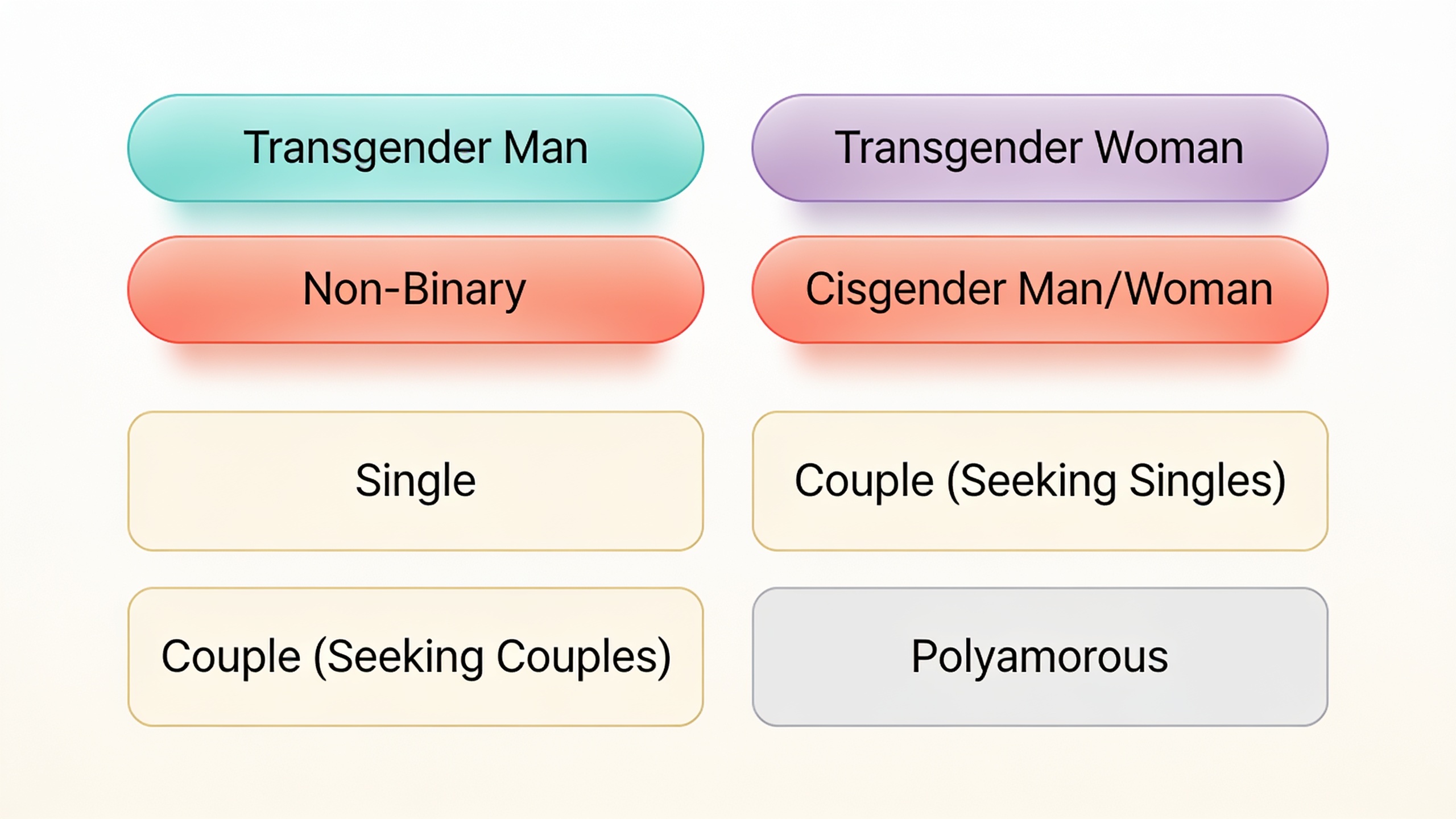
Dating app sign-up form showing inclusive gender identity and relationship structure options including couples and transgender categories

Here's a detail I won't gloss over. Flirtup's sign-up terms say that by joining, "I also agree to receive email newsletters, account updates, notifications and communications from other profiles, sent by site.sinfulbuddies.com," and that "Emails will be sent by DatingFactory.com network." So Flirtup runs as part of a bigger dating network, not as some fully standalone thing. Factor that in if network affiliation matters to you. It's the same kind of scrutiny sites like Cryptocoinsjournal apply when they dig into the actual mechanics behind new financial products before telling readers to trust them.

Tinder's page? It doesn't walk you through any sign-up flow in the visible text at all. What it does say, loud and clear, is scale: "55 billion matches to date," plus the line calling itself "the world's most popular dating app." That's a real, specific, sourceable claim straight from Tinder's own meta description, and it's a totally legit reason people default to Tinder first. What the page won't tell me, at least in the text I've got, is anything about the sign-up process, gender or orientation options, pricing, or how the matching actually works. So if you're comparing on granular sign-up detail, Flirtup gives you way more to chew on. If you're comparing on brand recognition and stated scale, Tinder wins that one.

How Bumble Compares

Bumble sets itself apart with a stated women-first dynamic and a dual-mode structure (dating plus friend-finding), and neither Flirtup nor Tinder describe anything like that on their own pages.

Bumble's meta description says the platform "has changed the way people date, create meaningful relationships & network with women making the first move." Women initiating contact. That's a specific, stated mechanic and it's central to who Bumble is. Beyond dating, the homepage lays out two modes. "Bumble Date," which it calls being "built to bring you closer to love safely and meaningfully," and "BFF," a way to "meet like-minded people who match your vibe" once you've "moved to a new city or just want to expand your circle." That's a real difference from Flirtup or Tinder. Bumble is openly positioning itself as more than a dating app.

There's also a "Member Circle," which Bumble describes as "a select community of Members" who "shares ideas directly with our team through chats, discussions, and product tests," with "early access to new features" and "sneak peeks at upcoming campaigns." Nobody else in this comparison mentions anything like that. If having a say in a platform's roadmap actually appeals to you, that's a point for Bumble, based on what's genuinely stated.

Where Bumble goes quiet: pricing, plans, and any matching mechanics past the "women message first" line. So I can confidently tell you Bumble differentiates on messaging dynamics and dual-mode use. I can't tell you what it costs.

What We Know (and Don't Know) About OkCupid

I've got no usable factual source for okcupid.com's current homepage, so I can't make any specific claim about its features, pricing, or positioning. And neither should any comparison that pretends otherwise.

I'd rather be upfront about this than paper over it. OkCupid has a long-standing reputation in the dating world, sure, but reputation isn't a sourced fact, and this whole article is built strictly from each site's own live text. That text wasn't available for OkCupid when I wrote this, which is why every OkCupid cell in the table reads "Not stated." I'm not going to invent sign-up flows, question-based matching, pricing tiers, or anything else. If OkCupid's on your shortlist, the honest move is to hit its current site directly and check the sign-up details, pricing, and features before you stack it against Flirtup, Tinder, or Bumble.

What We Know (and Don't Know) About PlentyOfFish

Same problem with plentyoffish.com. I don't have sourced text from its current homepage, so I can't state anything concrete about its features or pricing.

PlentyOfFish has historically been known as a free-to-use dating site, but again, that's a reputational point, not something I can verify from the source material I have. So instead of parroting unverified claims, I'm marking every PlentyOfFish row "Not stated" and telling you flat out: check plentyoffish.com's own current page for accurate, up-to-date details if it's in the running.

Pricing: What's Actually Stated

None of the five pages I reviewed (Flirtup, Tinder, Bumble, OkCupid, or PlentyOfFish) publicly state specific pricing tiers, subscription costs, or plan names in the text I could access.

This is exactly the spot where it's tempting to shrug and write "probably freemium" or "likely has a premium tier," because that's how this whole category usually works. I'm not doing it. What I can tell you is that Flirtup's sign-up page is all about account creation (gender, seeking preference, date of birth, email) with zero mention of cost. Tinder's page is all about brand scale, no cost. Bumble's page is all about its Date and BFF modes plus the community program, no cost. If pricing is your dealbreaker, and for most people comparing dating apps it absolutely is, you'll have to click through to each platform's actual sign-up or app-store listing, because the homepage text I sourced just doesn't spell it out.

Inclusivity and Relationship Options

Going by stated sign-up fields, Flirtup lists the widest explicit range of gender identities and relationship structures, couples and transgender categories included, of the platforms I could actually verify text for.

If you're specifically hunting for a platform that handles couples (Man + Woman, Man + Man, Woman + Woman) or transgender individuals (TS Male to Female, TS Female to Male) as sign-up categories from the get-go, Flirtup names all of them directly. Bumble's page drops example member names like "Danna," "Josh," and "Tiana" near the top but doesn't detail sign-up categories for gender or relationship structure in the text I have. Tinder's page doesn't detail sign-up categories at all in its visible meta content. And because OkCupid's and PlentyOfFish's pages weren't available to me, I can't compare them here. That's a genuine gap in this analysis, not proof they lack similar options.

Bottom line, if inclusivity of relationship structure at sign-up is your number one thing, Flirtup's stated categories are the most detailed match in this specific comparison, based strictly on what each site's own page tells me.

Which Should You Choose?

Single and after a casual, no-pressure vibe: Flirtup's whole tagline is literally "Meet, Chat, and Keep It Casual," and the sign-up flow is built around exactly that.

Part of a couple looking to connect with others together: Flirtup explicitly lists Couple (Man + Woman), Couple (Man + Man), and Couple (Woman + Woman) as sign-up categories, stated right on the page. None of the other four sites list couple-specific categories in the text I have.

Transgender or nonbinary and you want those categories named at sign-up: Flirtup lists Transgender TS Male to Female and TS Female to Male explicitly, both as an identity you pick and as something you can seek.

You want the biggest name with a stated huge user base: Tinder says "55 billion matches to date" and calls itself "the world's most popular dating app," which is the most specific scale claim of the five.

You want women controlling who messages first, or a friend-finding mode alongside dating: Bumble states both, plainly. "Women making the first move" for Bumble Date, and BFF for meeting people when "you've moved to a new city or just want to expand your circle."
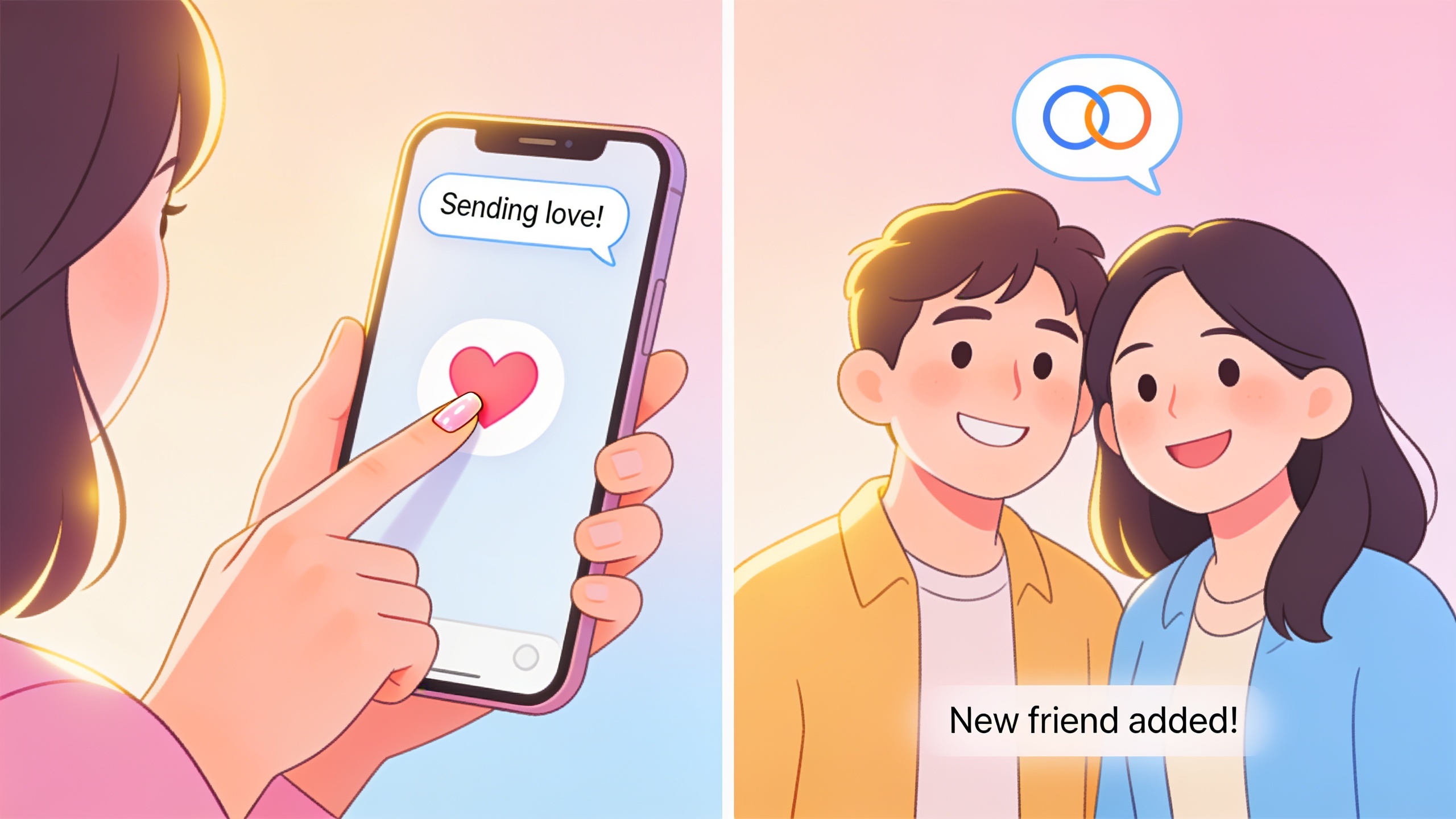
Bumble's dual features: women-first messaging for dating and BFF mode for making friends

You're specifically curious about OkCupid or PlentyOfFish: I can't make a use-case call on either from this source material, since their current homepage text wasn't available. Go check their sites directly before you decide.

Flirtup Alternatives Worth Knowing

If you're building a shortlist of Flirtup alternatives, Tinder and Bumble are the two competitors here with the most concrete, stated differentiators. Tinder's scale claim, and Bumble's women-first messaging plus BFF mode. OkCupid and PlentyOfFish get name-dropped in this space constantly, but like I said, I don't have sourced detail from their current pages to compare them fairly. So if they're on your list, go straight to the source.

Worth remembering too: dating platforms, like most consumer web products these days, lean hard on search visibility and content marketing just to get discovered in the first place. It's the same pressure that pushed tools like RobinRank into the AI-driven SEO and content space for businesses trying to get found. Totally different industry from dating apps, obviously. But it's a handy reminder that how a platform shows up in your search results says nothing about how good the actual product is once you're inside. Which is exactly why comparing stated features head to head, instead of trusting rankings or reputation, actually matters.

FAQ

Is Flirtup better than Tinder?
Depends what you care about. Flirtup's page states a more casual positioning and a broader, explicitly listed set of sign-up categories (couples and transgender identities included). Tinder's page states a huge scale claim ("55 billion matches to date") and massive brand recognition. Neither page gives me pricing or real matching-algorithm detail, so "better" honestly comes down to which stated strength matters more to you.

Does Flirtup work for couples?
Going by its sign-up page, yeah. Flirtup lists Couple (Man + Woman), Couple (Man + Man), and Couple (Woman + Woman) as identity options, and those same categories show up again under "Seeking a." It's stated directly in the sign-up flow.

Is Bumble only for women?
Nope. Bumble's own page describes itself as changing "the way people date, create meaningful relationships & network with women making the first move," which is about the messaging dynamic (women message first), not who's allowed to join. Bumble also states it offers BFF, a mode for meeting friends, right alongside Bumble Date.

How much does Flirtup, Tinder, Bumble, OkCupid, or PlentyOfFish cost?
None of the five sites' publicly available text I reviewed states specific pricing or plan tiers. If cost is your deciding factor, check each platform's current sign-up flow or app store listing directly, because pricing shifts around and it wasn't part of the homepage text I could get to.

Why isn't there more detail on OkCupid and PlentyOfFish here?
Their current homepage text wasn't available to me when I wrote this, so I chose to mark those sections "Not stated" rather than guess or lean on general reputation. That's a limitation of this specific comparison, not a claim about either platform's real features.

Final Take

Comparing Flirtup vs tinder.com, and dragging Bumble, OkCupid, and PlentyOfFish into it, really just comes down to matching what each platform actually says about itself to what you're after. Flirtup is upfront about being casual and inclusive of a wide range of identities and couples, right from the first sign-up screen. Tinder leans on scale and the name everyone knows. Bumble sets itself apart with women-first messaging and a built-in friend-finding mode. OkCupid and PlentyOfFish stay open questions here, simply because I didn't have sourced text to work from, and it's more useful to just tell you that than to fake it.

Whichever one you go with, read the actual current sign-up page yourself. Same way a careful reader would double-check a claim on a site like Cryptocoinsjournal before acting on it. The details that matter most to your decision tend to be the ones that change fastest.

🔥 Looking for casual dating near you? 💕 Meet new people, chat, and make real connections today! 📍

👉 Tap the link to get started and see who's nearby! ❤️

Sponsored | Affiliate Link 🔗


Wednesday, August 5, 2026

How to Set Boundaries in a No-Strings-Attached Relationship

How to Set Boundaries in a No-Strings-Attached Relationship

A no-strings-attached relationship can be one of the most freeing things you'll ever try. It's casual, low-pressure, and built around actually enjoying each other's company rather than signing up for a lifetime of joint bank accounts and holiday visits to the in-laws. But "no strings" doesn't mean "no rules." I've seen this go sideways enough times to know that without a few clear boundaries, even the most relaxed setup can curdle into hurt feelings, mixed signals, and the kind of awkwardness nobody wanted. So this is a walkthrough of how to actually set those boundaries, from the first conversation all the way to the eventual (usually inevitable) goodbye.

And look, whether you're brand new to casual dating or you've been burned before and want to avoid repeating the same mistakes, setting boundaries here isn't about killing the fun. It's the thing that keeps the fun going.

Table of Contents


  • What Is a No-Strings-Attached Relationship?
  • Why Setting Boundaries Matters in a No-Strings-Attached Relationship
  • How Do You Communicate Expectations Before Things Get Physical?
  • What Boundaries Should You Set in a No-Strings-Attached Relationship?
  • No-Strings-Attached vs. Other Casual Arrangements
  • How to Keep Things Drama-Free
  • How to End a No-Strings-Attached Relationship Gracefully
  • Where to Meet People Who Actually Want the Same Thing
  • FAQ

What Is a No-Strings-Attached Relationship?

A no-strings-attached relationship (NSA, if you want to sound like you know the lingo) is basically an arrangement where two people connect, usually physically and sometimes with a little emotional overlap, minus all the stuff that comes with a committed partnership. No exclusivity by default, no long-term planning, no meeting the parents. It runs on enjoying the present, not building a future.

Now, people often lump this in with friends-with-benefits, but they're not quite the same animal. FWB usually grows out of a friendship that already existed. NSA can happen between two strangers who both showed up specifically looking for something casual, often through a dating app or platform built for exactly that. And here's the part people get wrong: it's not about having zero feelings. You're not a robot. It's about having zero obligation. Nobody owes anybody check-ins, fidelity, or a say in how they spend their Saturday, unless the two of you decided otherwise.

The appeal is honestly pretty broad. Singles who want intimacy without giving up their whole schedule. Couples poking around outside the traditional relationship box. LGBTQ+ folks who just want a casual connection without having to shove it into some conventional shape. What actually makes it work isn't luck or chemistry, though those help. It's clarity, sorted out early and revisited when things shift.

Why Setting Boundaries Matters in a No-Strings-Attached Relationship

Boundaries matter in an NSA setup because they're literally the only structure holding the whole thing together. In a committed relationship, a ton of behavior runs on autopilot thanks to cultural default settings. Monogamy, regular contact, meeting the friends, all of it just sort of gets assumed. In a casual arrangement? None of that is automatic. Which means if you want it, you have to say it out loud.

Setting boundaries in a low-commitment context does two jobs at once. It protects your time, your emotional bandwidth, and your physical health. And it keeps the "no strings" part actually true, so the whole thing doesn't quietly morph into something one of you never agreed to. I've watched this exact pattern play out a dozen times: two people agree to keep it light, one starts catching feelings or wanting more texts, the other doesn't notice (or notices and says nothing), and then the whole thing implodes under a pile of assumptions nobody ever spoke aloud.

Clear boundaries also just cut down on the anxiety. When you know what's fair to ask for and what isn't, you can actually relax instead of dissecting every "seen at 11:47pm, no reply" like it's a crime scene.

How Do You Communicate Expectations Before Things Get Physical?

You communicate expectations by having a direct, low-pressure conversation before anything physical happens. Not after. Before. You cover what you both want, what you don't, and what would make either of you uncomfortable. And no, it doesn't need to be some formal sit-down with an agenda. It can happen over a drink, in a chat on an app, or as a quick gut-check before things go further.

The way I usually frame it is around three questions:

  • What are we both actually after here? Just physical, occasional company, something regular, or genuinely open to seeing where it goes?
  • Are we seeing other people, and does that stay private or get disclosed?
  • What would make either of us want to stop, and how do we want to hear about it if that happens?

Nail those down early and you skip the dreaded "wait, I thought we were exclusive?" conversation that hits around week three. It's kind of like anything else that needs a clear structure before you start executing. A beginner learning digital marketing might lean on a step-by-step resource like Sukhweb to get the fundamentals down before launching a campaign, and a no-strings arrangement runs a whole lot smoother when the basics are on the table before anyone's emotionally or physically invested.

Oh, and one more thing. Don't treat this as a one-and-done. Feelings drift, schedules blow up, circumstances change. A five-minute check-in every few weeks ("still good with how this is going?") keeps everyone honest and stops the slow buildup of stuff nobody said.

What Boundaries Should You Set in a No-Strings-Attached Relationship?

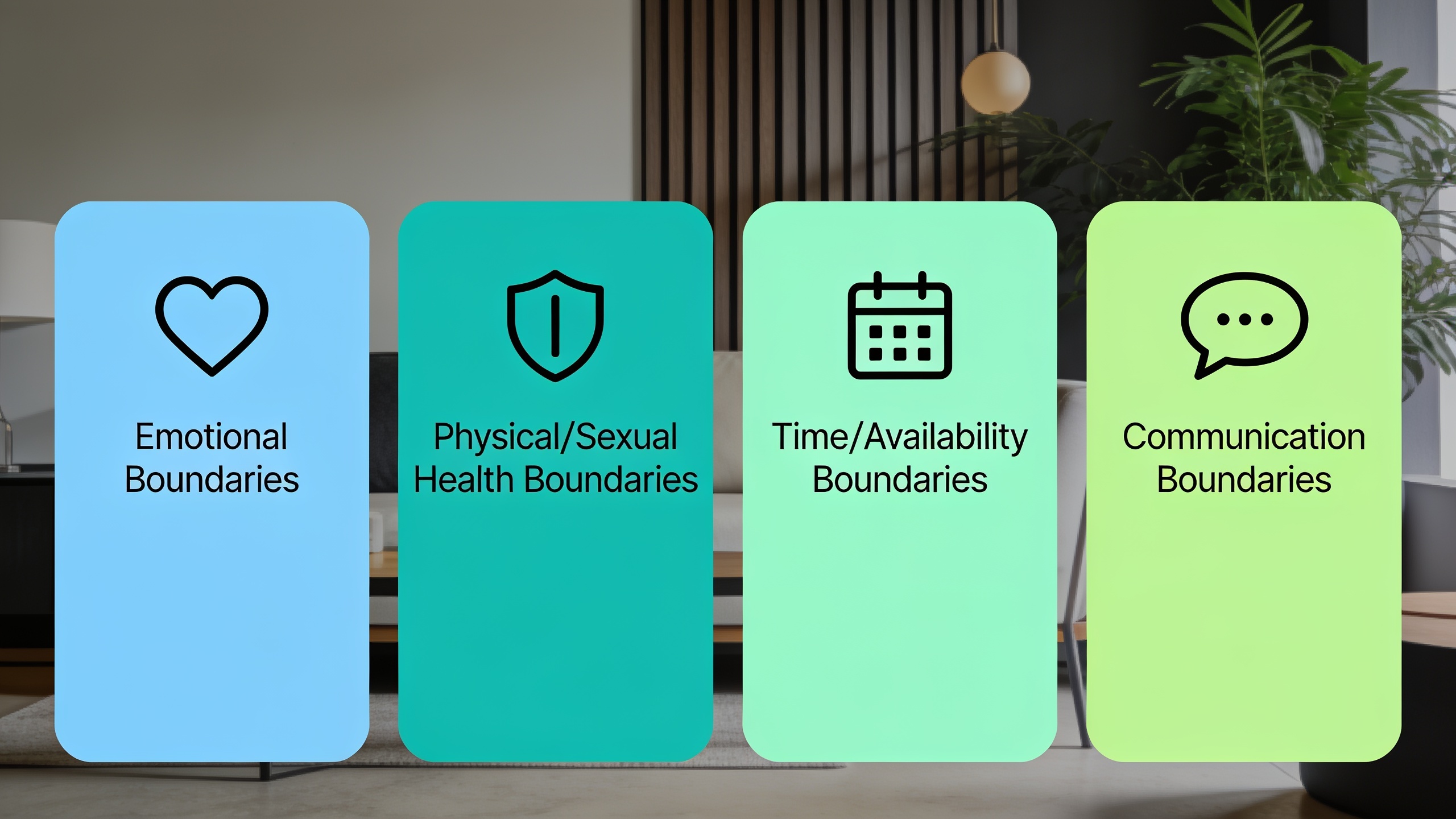
The boundaries that actually matter fall into four buckets: emotional, physical and sexual health, time and availability, and communication style. Cover those four and you've addressed pretty much every source of conflict that shows up in casual dating.

Emotional Boundaries

Emotional boundaries decide how much personal life gets shared and how much emotional support is on offer. In an NSA setup, it's totally reasonable to say you won't go deep on other people you're dating, won't lean on each other during a breakup or a family mess, or won't do the whole "meet my best friends" thing. This isn't about being cold. It's about matching the emotional intensity to the level of commitment you actually signed up for. And if one of you starts wanting more of that emotional involvement, name it. Out loud. Don't just let it happen by accident.

Physical and Sexual Health Boundaries

Physical boundaries cover consent, safer-sex practices, and exclusivity (or lack of it) around intimacy. Honestly, this is the one category where "eh, we'll figure it out" is not an acceptable answer. Be explicit. Condom use, how often you're each getting tested, whether either of you is sleeping with other people. Because these arrangements often involve multiple partners across everyone involved, this stuff protects way more people than just the two of you. Specific beats vague every single time here.

Time and Availability Boundaries

Time boundaries sort out how often you see each other, how much notice you expect, and what happens over holidays or busy stretches. Casual doesn't have to mean chaotic. But it also shouldn't drift into some unspoken assumption of nightly texts and weekly dates unless you both actually want that. Something as loose as "we text when we want to hang out, no daily check-ins" keeps it realistic.

Communication Boundaries

Communication boundaries are about response times, tone, and what's off the table conversationally. Some people want texting strictly for logistics and nothing more. Others enjoy a bit of ongoing banter. Figure out which camp you're each in, because that mismatch (one feeling ignored, the other feeling smothered) is a classic way these things fall apart.

Infographic showing four types of boundaries in casual relationships: emotional, physical, time, and communication

No-Strings-Attached vs. Other Casual Arrangements

NSA relationships share some DNA with other low-commitment dating styles, but the boundary expectations shift enough that it's worth knowing where each one sits.

ArrangementTypical Emotional InvolvementTypical ExclusivityBest Boundary Focus
No-strings-attached (NSA)Minimal, present-focusedUsually not exclusive unless agreedHealth, time, communication cadence
Friends with benefits (FWB)Moderate, built on existing friendshipVaries, often non-exclusiveProtecting the friendship, avoiding jealousy
Open relationshipHigher, ongoing partnership with outside connectionsNon-exclusive by design, with rulesDisclosure rules, jealousy management
Traditional dating relationshipHigh, future-orientedUsually exclusiveLong-term compatibility, shared goals

Treat this as a rough map, not gospel. Every arrangement gets defined by the people in it, not the label slapped on it. But it does show why the boundaries that work for a committed couple usually don't just copy-paste over to a casual thing. Trying to drag "relationship rules" wholesale into an NSA setup is a reliable recipe for friction.

How to Keep Things Drama-Free

Keeping an NSA relationship drama-free really comes down to two things: staying consistent between what you agreed to and what actually happens, and being willing to speak up early instead of letting little irritations pile up. Most of the drama in casual dating doesn't come from the arrangement itself. It comes from the gap between what someone expected and what actually went down, a gap nobody bothered to address in time.

A few habits that genuinely help.

Check in without making it A Whole Thing every time. A quick "hey, still feeling good about this?" every so often keeps you aligned without piling on pressure.

Watch out for boundary creep. This is when tiny exceptions quietly become the new normal. You agreed not to text daily, and now you're texting daily. You agreed on occasional dates, and now you've spent three straight weekends together. Catch it early: "hey, I've noticed we're talking a lot more, are we cool with that or should we dial it back?" That keeps the whole thing intentional instead of accidental.

And stop comparing it to a real relationship. Jealousy and resentment love to sneak in the moment someone starts measuring a casual thing against standards it was never built to meet. If you catch yourself doing that consistently, that's usually the sign the arrangement needs renegotiating or ending, not more mental gymnastics.

Respect a "no" the first time. If someone states a boundary, about frequency, about other people, about what's off-limits to talk about, you honor it immediately. No pushing, no guilt-tripping. In a dynamic where trust is already fragile, that's the thing that keeps it from crumbling.

Funny enough, the same discipline behind clear, structured communication shows up in totally unrelated places. Content platforms like RobinRank are basically built around making sure information is organized clearly enough to be understood at a glance, and that same "clarity over ambiguity" principle is exactly what keeps a casual dating setup from spiraling into a mess. Vague signals cause way more problems than direct ones, whether you're texting a partner or setting up content that needs to land correctly.

How to End a No-Strings-Attached Relationship Gracefully

An NSA relationship should be about as easy to end as it was to start, and doing it decently mostly just means being honest, doing it in a timely way, and not ghosting if you can help it. Because these things lack the formal structure of a traditional breakup, people sometimes convince themselves they can just vanish. Don't. A short, honest message is almost always the better call, especially if you've been at this for a while.

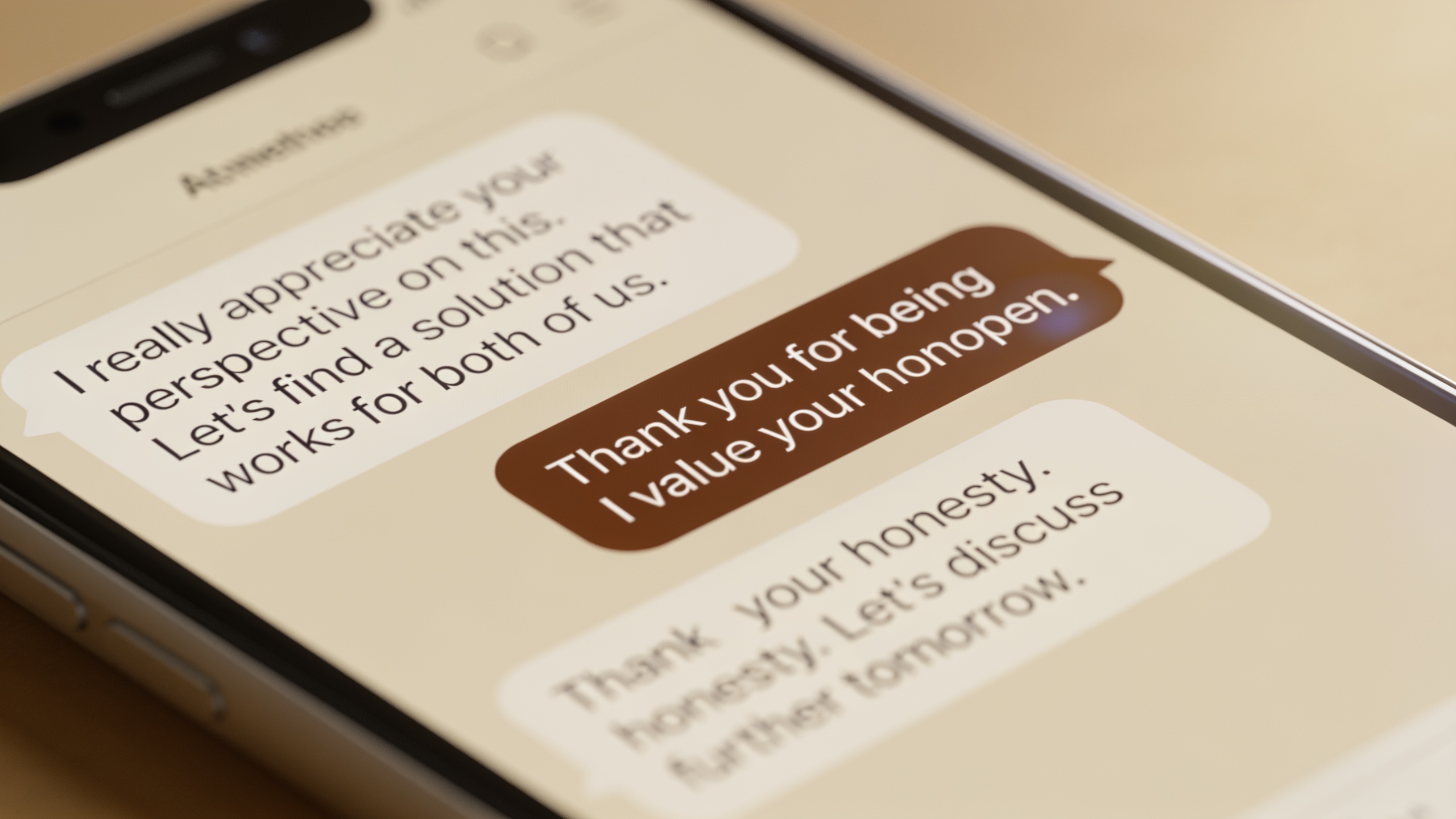
Example of respectful text communication ending a casual relationship gracefully

The simple version: say what changed (new relationship, moving away, lost interest, life got hectic), thank them for the time if it felt real, and don't over-explain or dangle false hope about reconnecting unless you actually mean it. You don't owe anyone a long emotional talk unless you both want one. Being brief isn't rude here. It's just appropriate to what the relationship was.

Now, if it's ending because someone kept crossing a line, they wouldn't stop pushing for more, ignored the exclusivity you agreed on, disrespected a limit you clearly stated, it's fine to just say that. Straight up. Clear feedback delivered once, without theatrics, is far more useful to the other person than some fuzzy "it's not you, it's me" that leaves them guessing.

Where to Meet People Who Actually Want the Same Thing

The easiest way to keep an NSA relationship boundary-friendly from day one is to meet someone who already wants the same thing, instead of trying to convert a mismatched connection into one later. That second approach basically never works. This is where a platform built specifically for casual dating saves you a ton of friction compared to a general app where everyone's intentions are a foggy mystery.

Flirtup is one of those platforms, built entirely around meeting, chatting, and keeping things casual with real people nearby. The sign-up lets you specify who you are and who you're hoping to connect with, covering a wide range of identities and pairings, including men, women, couples, and transgender individuals. That makes it a decent starting point for singles, couples exploring non-traditional dating, and LGBTQ+ users after casual connections without having to explain or justify what they want. Since basically everyone there is looking for the same low-commitment, no-pressure vibe, the "are we on the same page?" talk kicks off from a much friendlier place than it would on an app built for people hunting down marriage.

That said, no platform sets your boundaries for you. All it can do is put you in front of people more likely to want the same arrangement. The real work still happens in the conversation between two people. Ideally before things move too fast.

FAQ

Is it normal to catch feelings in a no-strings-attached relationship?
Yep, totally normal, and honestly kind of expected. Humans bond through repeated closeness, physical and emotional, even when the plan was to keep it light. The thing that matters is being honest about it instead of burying it. If feelings show up, say so, and let the other person decide whether they want to renegotiate or bow out. Pretending nothing changed just causes more hurt down the road.

How often should we check in about boundaries in a casual relationship?
No fixed schedule, but a light check-in every few weeks works well, or whenever something shifts, like you're suddenly talking way more or someone's dating life changes. It doesn't need to be a serious face-to-face. A quick, casual question does the job.

What if my no-strings partner wants more than I do?
Say something directly, and the moment you notice it, not by slowly fading out with no explanation. A line like "I really enjoy this, but I want to keep it exactly as casual as we agreed" respects both of your time and stops the other person from investing more than the whole thing was built for.

Can a no-strings-attached relationship turn into something serious?
It can, but only through an actual conversation and mutual agreement to change the terms. It shouldn't just happen by drift or assumption. If you both want to try something more committed, that's a brand-new arrangement with its own brand-new set of boundaries, not some natural evolution of the old one.

Do boundaries make a casual relationship less fun?
No, honestly the opposite. Boundaries are exactly what let you relax and enjoy a casual thing without second-guessing every little interaction. Ambiguity kills the fun, not clarity. Knowing precisely what's expected (and what isn't) removes the anxiety, which is usually the whole point of keeping things casual in the first place.

---

An NSA relationship works best when you both treat "casual" as an actual agreement rather than a vague vibe you're each interpreting differently. Talk about what you want before things get physical, revisit it as life shifts, and respect the other person's limits as much as your own. Do that, and low-commitment dating stays exactly what it's meant to be: enjoyable, honest, and blissfully drama-free.

👉 Read More: How to Keep Things Casual