Monday, August 10, 2026

Flirtup vs tinder.com: Full Comparison

Flirtup vs tinder.com: Full Comparison

So you're stuck between Flirtup and tinder.com, which usually means you're trying to figure out one thing: do you want casual and low-pressure, or do you want the big swipe-based machine everyone already knows? I've pulled in bumble.com, okcupid.com, and plentyoffish.com too, so you can size up the whole field before handing over your email anywhere.

Quick version. Flirtup is the pick for singles, couples, and LGBTQ+ users who want a casual-dating-first sign-up with broad options for how you define your relationship. Tinder's the pick if you just want the app everyone's heard of, with a giant user base behind it. Bumble makes sense if you specifically want the woman-messages-first thing or a friend-finding mode bolted onto your dating. OkCupid and PlentyOfFish might suit you too, but honestly, their current public sites didn't give me enough to say anything concrete. More on that mess later.
Flirtup website screenshot

tinder.com website screenshot

bumble.com website screenshot

Table of Contents


  • Quick Verdict
  • Flirtup vs tinder.com vs Bumble vs OkCupid vs PlentyOfFish: Comparison Table
  • Flirtup vs tinder.com: Sign-Up and Positioning
  • How Bumble Compares
  • What We Know (and Don't Know) About OkCupid
  • What We Know (and Don't Know) About PlentyOfFish
  • Pricing: What's Actually Stated
  • Inclusivity and Relationship Options
  • Which Should You Choose?
  • Flirtup Alternatives Worth Knowing
  • FAQ
  • Final Take

Quick Verdict

Want casual connections with explicit options for couples and transgender users baked into the sign-up? Flirtup is built for that from the very first screen. Want the name everyone recognizes, with a stated track record ("55 billion matches to date," per Tinder's own meta description)? Tinder's got the scale. Care about a woman-first messaging model or a built-in friend-finding mode (BFF)? Bumble spells both of those out right on its homepage.

As for OkCupid and PlentyOfFish, I just don't have enough verifiable detail from their current public pages to make a real claim either way. And that gap itself tells you something if you're deciding where to spend your research time.

Flirtup vs tinder.com vs Bumble vs OkCupid vs PlentyOfFish: Comparison Table

FeatureFlirtuptinder.combumble.comokcupid.complentyoffish.com
Tagline / positioning"Meet, Chat, and Keep It Casual""The world's most popular dating app""We exist to bring people closer to love"Not statedNot stated
Sign-up gender/orientation optionsMan, Woman, Couple (M+F), Couple (M+M), Couple (W+W), Transgender (TS M2F), Transgender (TS F2M)Not statedNot statedNot statedNot stated
"Seeking" optionsMan, Woman, Couple (M+F), Couple (M+M), Couple (W+W), TV/CD, TS M2F, TS F2MNot statedNot statedNot statedNot stated
Core feature/modeCasual connection sign-up flowSwipe-based matching (implied by brand history, not detailed on page)Bumble Date (dating) and BFF (friend-finding)Not statedNot stated
Stated user/matches figureNot stated55 billion matches to dateNot statedNot statedNot stated
Community programNot statedNot statedMember Circle (user feedback community, early feature access)Not statedNot stated
App availabilityNot stated explicitly on pageImplied ("app")Yes, with QR code downloadNot statedNot stated
Pricing/plansNot statedNot statedNot statedNot statedNot stated
Network affiliationPart of the DatingFactory.com network (per sign-up terms)Not statedNot statedNot statedNot stated
Best forCasual dating across a wide range of relationship structures, including couplesBroad, high-volume swipe datingWomen-first messaging, dating + friendshipNot statedNot stated

One honest note about that table. Every time you see "Not stated," it means the site's own text didn't hand me that detail. It does not mean the feature isn't there. I'd rather leave a hole than fill it with a guess.

Flirtup vs tinder.com: Sign-Up and Positioning

Flirtup and Tinder start from completely different places. Flirtup opens with a detailed relationship-structure questionnaire, while Tinder's public page leads with scale and brand recognition and barely touches the actual sign-up mechanics.

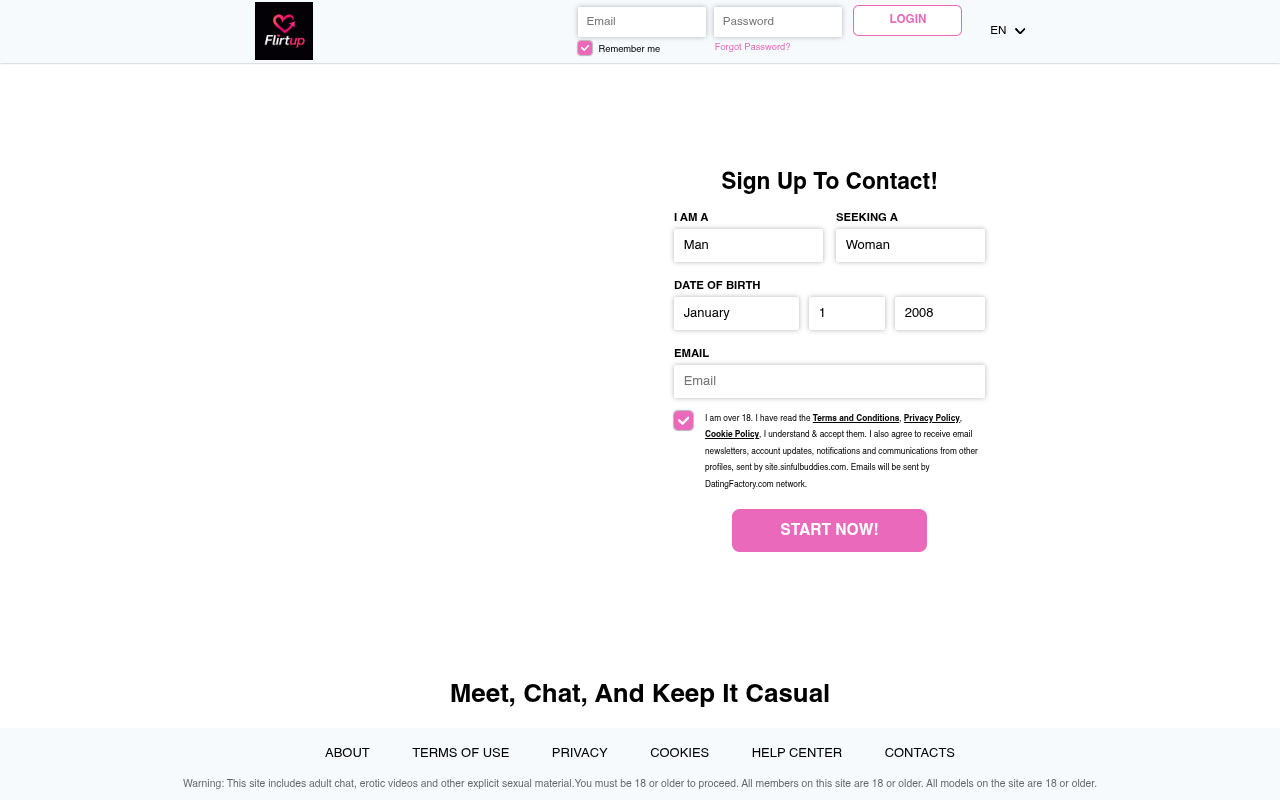
Flirtup's homepage is basically one big sign-up flow. Right away it asks "I am a:" and gives you Man, Woman, Couple (Man + Woman), Couple (Man + Man), Couple (Woman + Woman), Transgender TS Male to Female, and Transgender TS Female to Male. Then it asks who you're "Seeking," which tacks on a TV/CD (transvestite/cross-dresser) option to that same list. That's a genuinely wider set of identity and relationship categories than most dating sites bother to spell out at sign-up, and it's a pretty loud signal about who Flirtup is actually built for. Singles across the gender spectrum, plus couples looking to connect together instead of the usual one-on-one setup. The tagline, "Meet, Chat, and Keep It Casual," backs that up. This isn't a marriage-first platform. It's for people who want dating to be fun and low-stakes.
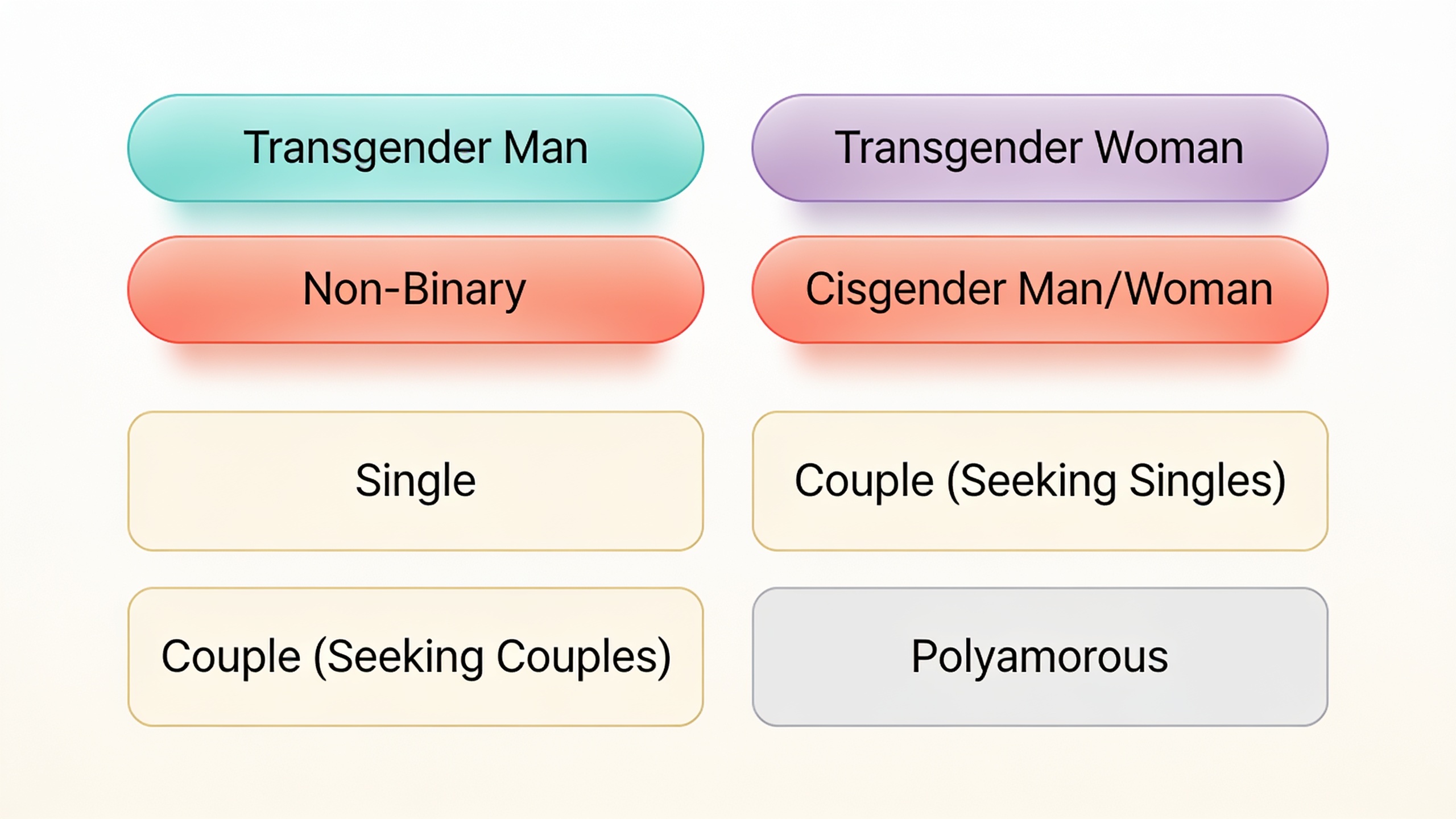
Dating app sign-up form showing inclusive gender identity and relationship structure options including couples and transgender categories

Here's a detail I won't gloss over. Flirtup's sign-up terms say that by joining, "I also agree to receive email newsletters, account updates, notifications and communications from other profiles, sent by site.sinfulbuddies.com," and that "Emails will be sent by DatingFactory.com network." So Flirtup runs as part of a bigger dating network, not as some fully standalone thing. Factor that in if network affiliation matters to you. It's the same kind of scrutiny sites like Cryptocoinsjournal apply when they dig into the actual mechanics behind new financial products before telling readers to trust them.

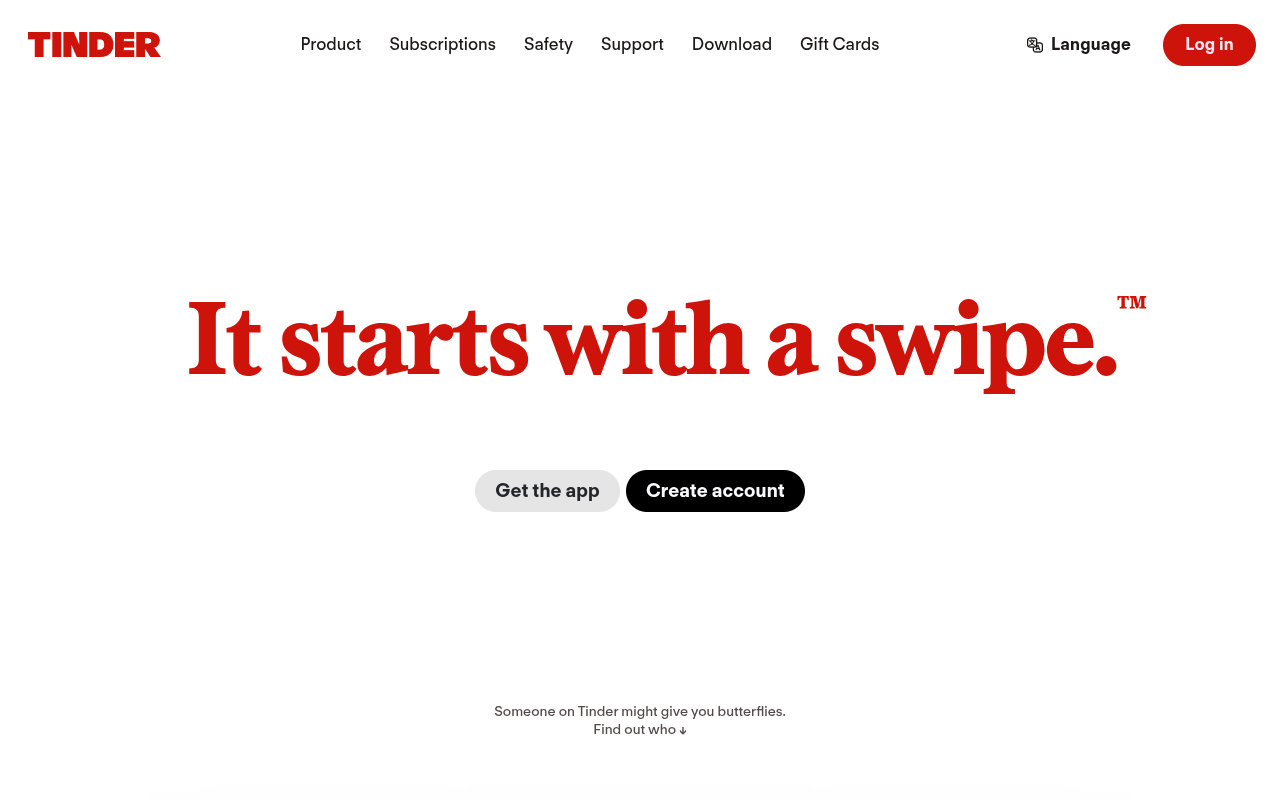
Tinder's page? It doesn't walk you through any sign-up flow in the visible text at all. What it does say, loud and clear, is scale: "55 billion matches to date," plus the line calling itself "the world's most popular dating app." That's a real, specific, sourceable claim straight from Tinder's own meta description, and it's a totally legit reason people default to Tinder first. What the page won't tell me, at least in the text I've got, is anything about the sign-up process, gender or orientation options, pricing, or how the matching actually works. So if you're comparing on granular sign-up detail, Flirtup gives you way more to chew on. If you're comparing on brand recognition and stated scale, Tinder wins that one.

How Bumble Compares

Bumble sets itself apart with a stated women-first dynamic and a dual-mode structure (dating plus friend-finding), and neither Flirtup nor Tinder describe anything like that on their own pages.

Bumble's meta description says the platform "has changed the way people date, create meaningful relationships & network with women making the first move." Women initiating contact. That's a specific, stated mechanic and it's central to who Bumble is. Beyond dating, the homepage lays out two modes. "Bumble Date," which it calls being "built to bring you closer to love safely and meaningfully," and "BFF," a way to "meet like-minded people who match your vibe" once you've "moved to a new city or just want to expand your circle." That's a real difference from Flirtup or Tinder. Bumble is openly positioning itself as more than a dating app.

There's also a "Member Circle," which Bumble describes as "a select community of Members" who "shares ideas directly with our team through chats, discussions, and product tests," with "early access to new features" and "sneak peeks at upcoming campaigns." Nobody else in this comparison mentions anything like that. If having a say in a platform's roadmap actually appeals to you, that's a point for Bumble, based on what's genuinely stated.

Where Bumble goes quiet: pricing, plans, and any matching mechanics past the "women message first" line. So I can confidently tell you Bumble differentiates on messaging dynamics and dual-mode use. I can't tell you what it costs.

What We Know (and Don't Know) About OkCupid

I've got no usable factual source for okcupid.com's current homepage, so I can't make any specific claim about its features, pricing, or positioning. And neither should any comparison that pretends otherwise.

I'd rather be upfront about this than paper over it. OkCupid has a long-standing reputation in the dating world, sure, but reputation isn't a sourced fact, and this whole article is built strictly from each site's own live text. That text wasn't available for OkCupid when I wrote this, which is why every OkCupid cell in the table reads "Not stated." I'm not going to invent sign-up flows, question-based matching, pricing tiers, or anything else. If OkCupid's on your shortlist, the honest move is to hit its current site directly and check the sign-up details, pricing, and features before you stack it against Flirtup, Tinder, or Bumble.

What We Know (and Don't Know) About PlentyOfFish

Same problem with plentyoffish.com. I don't have sourced text from its current homepage, so I can't state anything concrete about its features or pricing.

PlentyOfFish has historically been known as a free-to-use dating site, but again, that's a reputational point, not something I can verify from the source material I have. So instead of parroting unverified claims, I'm marking every PlentyOfFish row "Not stated" and telling you flat out: check plentyoffish.com's own current page for accurate, up-to-date details if it's in the running.

Pricing: What's Actually Stated

None of the five pages I reviewed (Flirtup, Tinder, Bumble, OkCupid, or PlentyOfFish) publicly state specific pricing tiers, subscription costs, or plan names in the text I could access.

This is exactly the spot where it's tempting to shrug and write "probably freemium" or "likely has a premium tier," because that's how this whole category usually works. I'm not doing it. What I can tell you is that Flirtup's sign-up page is all about account creation (gender, seeking preference, date of birth, email) with zero mention of cost. Tinder's page is all about brand scale, no cost. Bumble's page is all about its Date and BFF modes plus the community program, no cost. If pricing is your dealbreaker, and for most people comparing dating apps it absolutely is, you'll have to click through to each platform's actual sign-up or app-store listing, because the homepage text I sourced just doesn't spell it out.

Inclusivity and Relationship Options

Going by stated sign-up fields, Flirtup lists the widest explicit range of gender identities and relationship structures, couples and transgender categories included, of the platforms I could actually verify text for.

If you're specifically hunting for a platform that handles couples (Man + Woman, Man + Man, Woman + Woman) or transgender individuals (TS Male to Female, TS Female to Male) as sign-up categories from the get-go, Flirtup names all of them directly. Bumble's page drops example member names like "Danna," "Josh," and "Tiana" near the top but doesn't detail sign-up categories for gender or relationship structure in the text I have. Tinder's page doesn't detail sign-up categories at all in its visible meta content. And because OkCupid's and PlentyOfFish's pages weren't available to me, I can't compare them here. That's a genuine gap in this analysis, not proof they lack similar options.

Bottom line, if inclusivity of relationship structure at sign-up is your number one thing, Flirtup's stated categories are the most detailed match in this specific comparison, based strictly on what each site's own page tells me.

Which Should You Choose?

Single and after a casual, no-pressure vibe: Flirtup's whole tagline is literally "Meet, Chat, and Keep It Casual," and the sign-up flow is built around exactly that.

Part of a couple looking to connect with others together: Flirtup explicitly lists Couple (Man + Woman), Couple (Man + Man), and Couple (Woman + Woman) as sign-up categories, stated right on the page. None of the other four sites list couple-specific categories in the text I have.

Transgender or nonbinary and you want those categories named at sign-up: Flirtup lists Transgender TS Male to Female and TS Female to Male explicitly, both as an identity you pick and as something you can seek.

You want the biggest name with a stated huge user base: Tinder says "55 billion matches to date" and calls itself "the world's most popular dating app," which is the most specific scale claim of the five.

You want women controlling who messages first, or a friend-finding mode alongside dating: Bumble states both, plainly. "Women making the first move" for Bumble Date, and BFF for meeting people when "you've moved to a new city or just want to expand your circle."
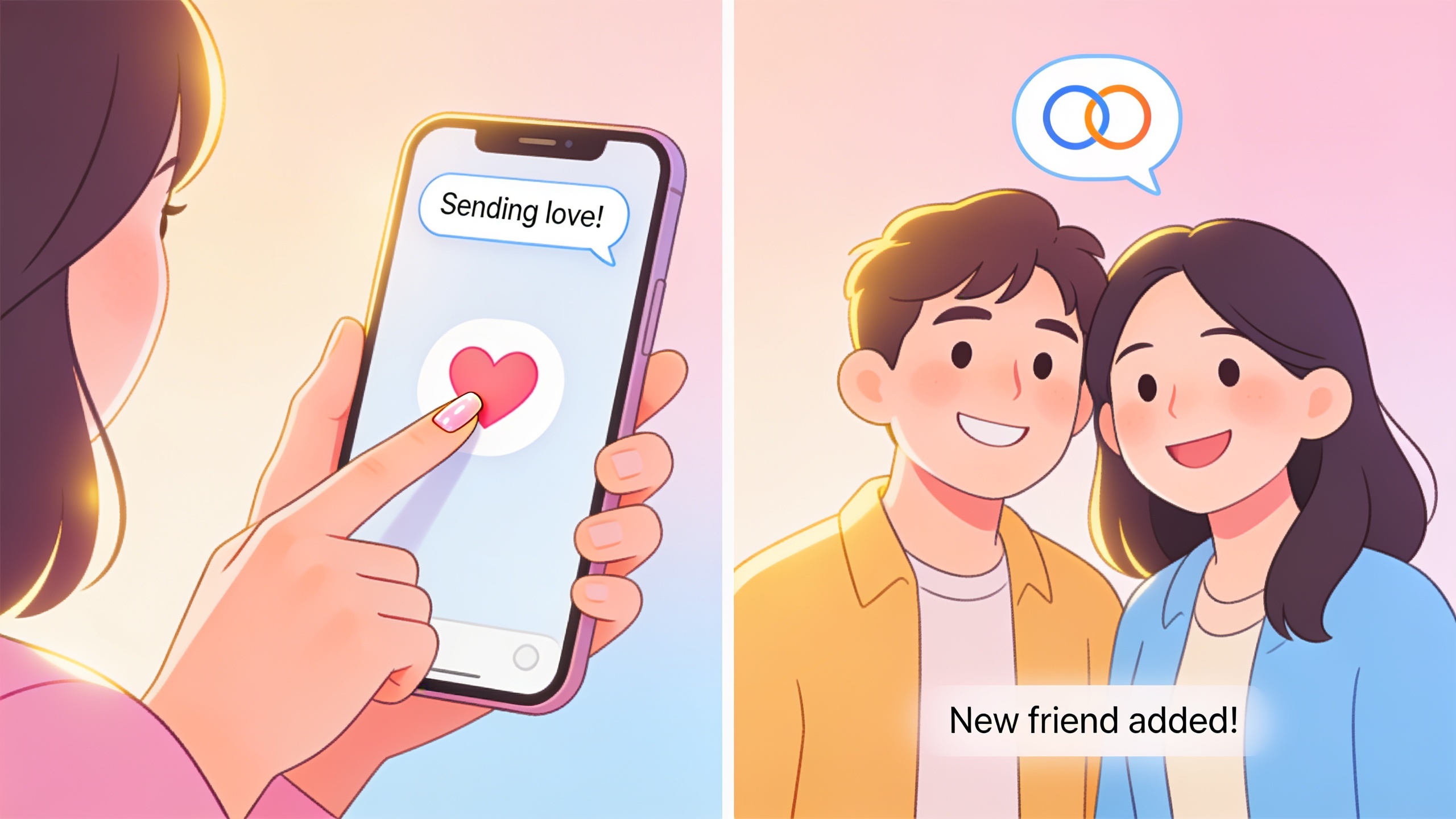
Bumble's dual features: women-first messaging for dating and BFF mode for making friends

You're specifically curious about OkCupid or PlentyOfFish: I can't make a use-case call on either from this source material, since their current homepage text wasn't available. Go check their sites directly before you decide.

Flirtup Alternatives Worth Knowing

If you're building a shortlist of Flirtup alternatives, Tinder and Bumble are the two competitors here with the most concrete, stated differentiators. Tinder's scale claim, and Bumble's women-first messaging plus BFF mode. OkCupid and PlentyOfFish get name-dropped in this space constantly, but like I said, I don't have sourced detail from their current pages to compare them fairly. So if they're on your list, go straight to the source.

Worth remembering too: dating platforms, like most consumer web products these days, lean hard on search visibility and content marketing just to get discovered in the first place. It's the same pressure that pushed tools like RobinRank into the AI-driven SEO and content space for businesses trying to get found. Totally different industry from dating apps, obviously. But it's a handy reminder that how a platform shows up in your search results says nothing about how good the actual product is once you're inside. Which is exactly why comparing stated features head to head, instead of trusting rankings or reputation, actually matters.

FAQ

Is Flirtup better than Tinder?
Depends what you care about. Flirtup's page states a more casual positioning and a broader, explicitly listed set of sign-up categories (couples and transgender identities included). Tinder's page states a huge scale claim ("55 billion matches to date") and massive brand recognition. Neither page gives me pricing or real matching-algorithm detail, so "better" honestly comes down to which stated strength matters more to you.

Does Flirtup work for couples?
Going by its sign-up page, yeah. Flirtup lists Couple (Man + Woman), Couple (Man + Man), and Couple (Woman + Woman) as identity options, and those same categories show up again under "Seeking a." It's stated directly in the sign-up flow.

Is Bumble only for women?
Nope. Bumble's own page describes itself as changing "the way people date, create meaningful relationships & network with women making the first move," which is about the messaging dynamic (women message first), not who's allowed to join. Bumble also states it offers BFF, a mode for meeting friends, right alongside Bumble Date.

How much does Flirtup, Tinder, Bumble, OkCupid, or PlentyOfFish cost?
None of the five sites' publicly available text I reviewed states specific pricing or plan tiers. If cost is your deciding factor, check each platform's current sign-up flow or app store listing directly, because pricing shifts around and it wasn't part of the homepage text I could get to.

Why isn't there more detail on OkCupid and PlentyOfFish here?
Their current homepage text wasn't available to me when I wrote this, so I chose to mark those sections "Not stated" rather than guess or lean on general reputation. That's a limitation of this specific comparison, not a claim about either platform's real features.

Final Take

Comparing Flirtup vs tinder.com, and dragging Bumble, OkCupid, and PlentyOfFish into it, really just comes down to matching what each platform actually says about itself to what you're after. Flirtup is upfront about being casual and inclusive of a wide range of identities and couples, right from the first sign-up screen. Tinder leans on scale and the name everyone knows. Bumble sets itself apart with women-first messaging and a built-in friend-finding mode. OkCupid and PlentyOfFish stay open questions here, simply because I didn't have sourced text to work from, and it's more useful to just tell you that than to fake it.

Whichever one you go with, read the actual current sign-up page yourself. Same way a careful reader would double-check a claim on a site like Cryptocoinsjournal before acting on it. The details that matter most to your decision tend to be the ones that change fastest.

🔥 Looking for casual dating near you? 💕 Meet new people, chat, and make real connections today! 📍

👉 Tap the link to get started and see who's nearby! ❤️

Sponsored | Affiliate Link 🔗


Wednesday, August 5, 2026

How to Set Boundaries in a No-Strings-Attached Relationship

How to Set Boundaries in a No-Strings-Attached Relationship

A no-strings-attached relationship can be one of the most freeing things you'll ever try. It's casual, low-pressure, and built around actually enjoying each other's company rather than signing up for a lifetime of joint bank accounts and holiday visits to the in-laws. But "no strings" doesn't mean "no rules." I've seen this go sideways enough times to know that without a few clear boundaries, even the most relaxed setup can curdle into hurt feelings, mixed signals, and the kind of awkwardness nobody wanted. So this is a walkthrough of how to actually set those boundaries, from the first conversation all the way to the eventual (usually inevitable) goodbye.

And look, whether you're brand new to casual dating or you've been burned before and want to avoid repeating the same mistakes, setting boundaries here isn't about killing the fun. It's the thing that keeps the fun going.

Table of Contents


  • What Is a No-Strings-Attached Relationship?
  • Why Setting Boundaries Matters in a No-Strings-Attached Relationship
  • How Do You Communicate Expectations Before Things Get Physical?
  • What Boundaries Should You Set in a No-Strings-Attached Relationship?
  • No-Strings-Attached vs. Other Casual Arrangements
  • How to Keep Things Drama-Free
  • How to End a No-Strings-Attached Relationship Gracefully
  • Where to Meet People Who Actually Want the Same Thing
  • FAQ

What Is a No-Strings-Attached Relationship?

A no-strings-attached relationship (NSA, if you want to sound like you know the lingo) is basically an arrangement where two people connect, usually physically and sometimes with a little emotional overlap, minus all the stuff that comes with a committed partnership. No exclusivity by default, no long-term planning, no meeting the parents. It runs on enjoying the present, not building a future.

Now, people often lump this in with friends-with-benefits, but they're not quite the same animal. FWB usually grows out of a friendship that already existed. NSA can happen between two strangers who both showed up specifically looking for something casual, often through a dating app or platform built for exactly that. And here's the part people get wrong: it's not about having zero feelings. You're not a robot. It's about having zero obligation. Nobody owes anybody check-ins, fidelity, or a say in how they spend their Saturday, unless the two of you decided otherwise.

The appeal is honestly pretty broad. Singles who want intimacy without giving up their whole schedule. Couples poking around outside the traditional relationship box. LGBTQ+ folks who just want a casual connection without having to shove it into some conventional shape. What actually makes it work isn't luck or chemistry, though those help. It's clarity, sorted out early and revisited when things shift.

Why Setting Boundaries Matters in a No-Strings-Attached Relationship

Boundaries matter in an NSA setup because they're literally the only structure holding the whole thing together. In a committed relationship, a ton of behavior runs on autopilot thanks to cultural default settings. Monogamy, regular contact, meeting the friends, all of it just sort of gets assumed. In a casual arrangement? None of that is automatic. Which means if you want it, you have to say it out loud.

Setting boundaries in a low-commitment context does two jobs at once. It protects your time, your emotional bandwidth, and your physical health. And it keeps the "no strings" part actually true, so the whole thing doesn't quietly morph into something one of you never agreed to. I've watched this exact pattern play out a dozen times: two people agree to keep it light, one starts catching feelings or wanting more texts, the other doesn't notice (or notices and says nothing), and then the whole thing implodes under a pile of assumptions nobody ever spoke aloud.

Clear boundaries also just cut down on the anxiety. When you know what's fair to ask for and what isn't, you can actually relax instead of dissecting every "seen at 11:47pm, no reply" like it's a crime scene.

How Do You Communicate Expectations Before Things Get Physical?

You communicate expectations by having a direct, low-pressure conversation before anything physical happens. Not after. Before. You cover what you both want, what you don't, and what would make either of you uncomfortable. And no, it doesn't need to be some formal sit-down with an agenda. It can happen over a drink, in a chat on an app, or as a quick gut-check before things go further.

The way I usually frame it is around three questions:

  • What are we both actually after here? Just physical, occasional company, something regular, or genuinely open to seeing where it goes?
  • Are we seeing other people, and does that stay private or get disclosed?
  • What would make either of us want to stop, and how do we want to hear about it if that happens?

Nail those down early and you skip the dreaded "wait, I thought we were exclusive?" conversation that hits around week three. It's kind of like anything else that needs a clear structure before you start executing. A beginner learning digital marketing might lean on a step-by-step resource like Sukhweb to get the fundamentals down before launching a campaign, and a no-strings arrangement runs a whole lot smoother when the basics are on the table before anyone's emotionally or physically invested.

Oh, and one more thing. Don't treat this as a one-and-done. Feelings drift, schedules blow up, circumstances change. A five-minute check-in every few weeks ("still good with how this is going?") keeps everyone honest and stops the slow buildup of stuff nobody said.

What Boundaries Should You Set in a No-Strings-Attached Relationship?

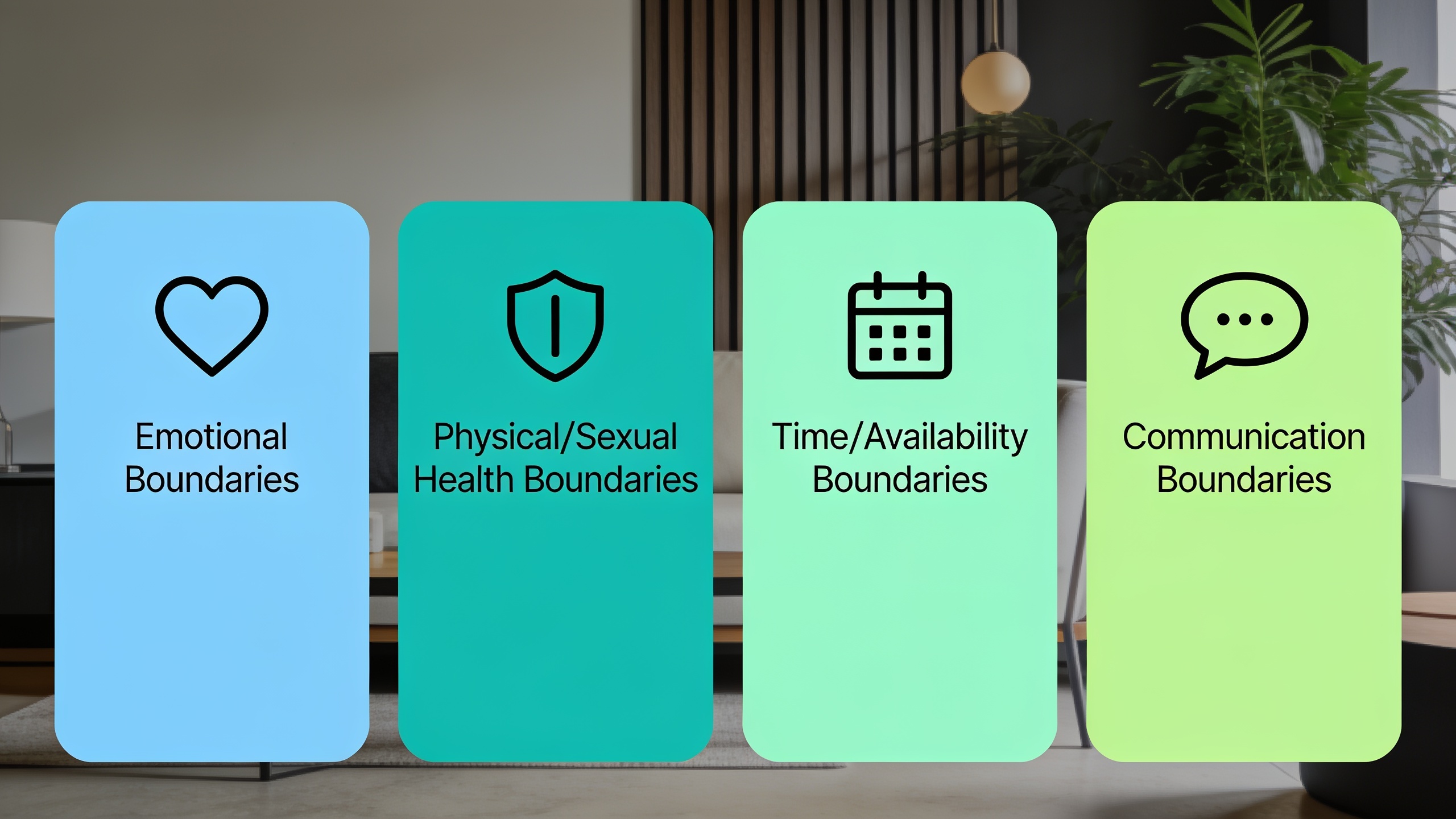
The boundaries that actually matter fall into four buckets: emotional, physical and sexual health, time and availability, and communication style. Cover those four and you've addressed pretty much every source of conflict that shows up in casual dating.

Emotional Boundaries

Emotional boundaries decide how much personal life gets shared and how much emotional support is on offer. In an NSA setup, it's totally reasonable to say you won't go deep on other people you're dating, won't lean on each other during a breakup or a family mess, or won't do the whole "meet my best friends" thing. This isn't about being cold. It's about matching the emotional intensity to the level of commitment you actually signed up for. And if one of you starts wanting more of that emotional involvement, name it. Out loud. Don't just let it happen by accident.

Physical and Sexual Health Boundaries

Physical boundaries cover consent, safer-sex practices, and exclusivity (or lack of it) around intimacy. Honestly, this is the one category where "eh, we'll figure it out" is not an acceptable answer. Be explicit. Condom use, how often you're each getting tested, whether either of you is sleeping with other people. Because these arrangements often involve multiple partners across everyone involved, this stuff protects way more people than just the two of you. Specific beats vague every single time here.

Time and Availability Boundaries

Time boundaries sort out how often you see each other, how much notice you expect, and what happens over holidays or busy stretches. Casual doesn't have to mean chaotic. But it also shouldn't drift into some unspoken assumption of nightly texts and weekly dates unless you both actually want that. Something as loose as "we text when we want to hang out, no daily check-ins" keeps it realistic.

Communication Boundaries

Communication boundaries are about response times, tone, and what's off the table conversationally. Some people want texting strictly for logistics and nothing more. Others enjoy a bit of ongoing banter. Figure out which camp you're each in, because that mismatch (one feeling ignored, the other feeling smothered) is a classic way these things fall apart.

Infographic showing four types of boundaries in casual relationships: emotional, physical, time, and communication

No-Strings-Attached vs. Other Casual Arrangements

NSA relationships share some DNA with other low-commitment dating styles, but the boundary expectations shift enough that it's worth knowing where each one sits.

ArrangementTypical Emotional InvolvementTypical ExclusivityBest Boundary Focus
No-strings-attached (NSA)Minimal, present-focusedUsually not exclusive unless agreedHealth, time, communication cadence
Friends with benefits (FWB)Moderate, built on existing friendshipVaries, often non-exclusiveProtecting the friendship, avoiding jealousy
Open relationshipHigher, ongoing partnership with outside connectionsNon-exclusive by design, with rulesDisclosure rules, jealousy management
Traditional dating relationshipHigh, future-orientedUsually exclusiveLong-term compatibility, shared goals

Treat this as a rough map, not gospel. Every arrangement gets defined by the people in it, not the label slapped on it. But it does show why the boundaries that work for a committed couple usually don't just copy-paste over to a casual thing. Trying to drag "relationship rules" wholesale into an NSA setup is a reliable recipe for friction.

How to Keep Things Drama-Free

Keeping an NSA relationship drama-free really comes down to two things: staying consistent between what you agreed to and what actually happens, and being willing to speak up early instead of letting little irritations pile up. Most of the drama in casual dating doesn't come from the arrangement itself. It comes from the gap between what someone expected and what actually went down, a gap nobody bothered to address in time.

A few habits that genuinely help.

Check in without making it A Whole Thing every time. A quick "hey, still feeling good about this?" every so often keeps you aligned without piling on pressure.

Watch out for boundary creep. This is when tiny exceptions quietly become the new normal. You agreed not to text daily, and now you're texting daily. You agreed on occasional dates, and now you've spent three straight weekends together. Catch it early: "hey, I've noticed we're talking a lot more, are we cool with that or should we dial it back?" That keeps the whole thing intentional instead of accidental.

And stop comparing it to a real relationship. Jealousy and resentment love to sneak in the moment someone starts measuring a casual thing against standards it was never built to meet. If you catch yourself doing that consistently, that's usually the sign the arrangement needs renegotiating or ending, not more mental gymnastics.

Respect a "no" the first time. If someone states a boundary, about frequency, about other people, about what's off-limits to talk about, you honor it immediately. No pushing, no guilt-tripping. In a dynamic where trust is already fragile, that's the thing that keeps it from crumbling.

Funny enough, the same discipline behind clear, structured communication shows up in totally unrelated places. Content platforms like RobinRank are basically built around making sure information is organized clearly enough to be understood at a glance, and that same "clarity over ambiguity" principle is exactly what keeps a casual dating setup from spiraling into a mess. Vague signals cause way more problems than direct ones, whether you're texting a partner or setting up content that needs to land correctly.

How to End a No-Strings-Attached Relationship Gracefully

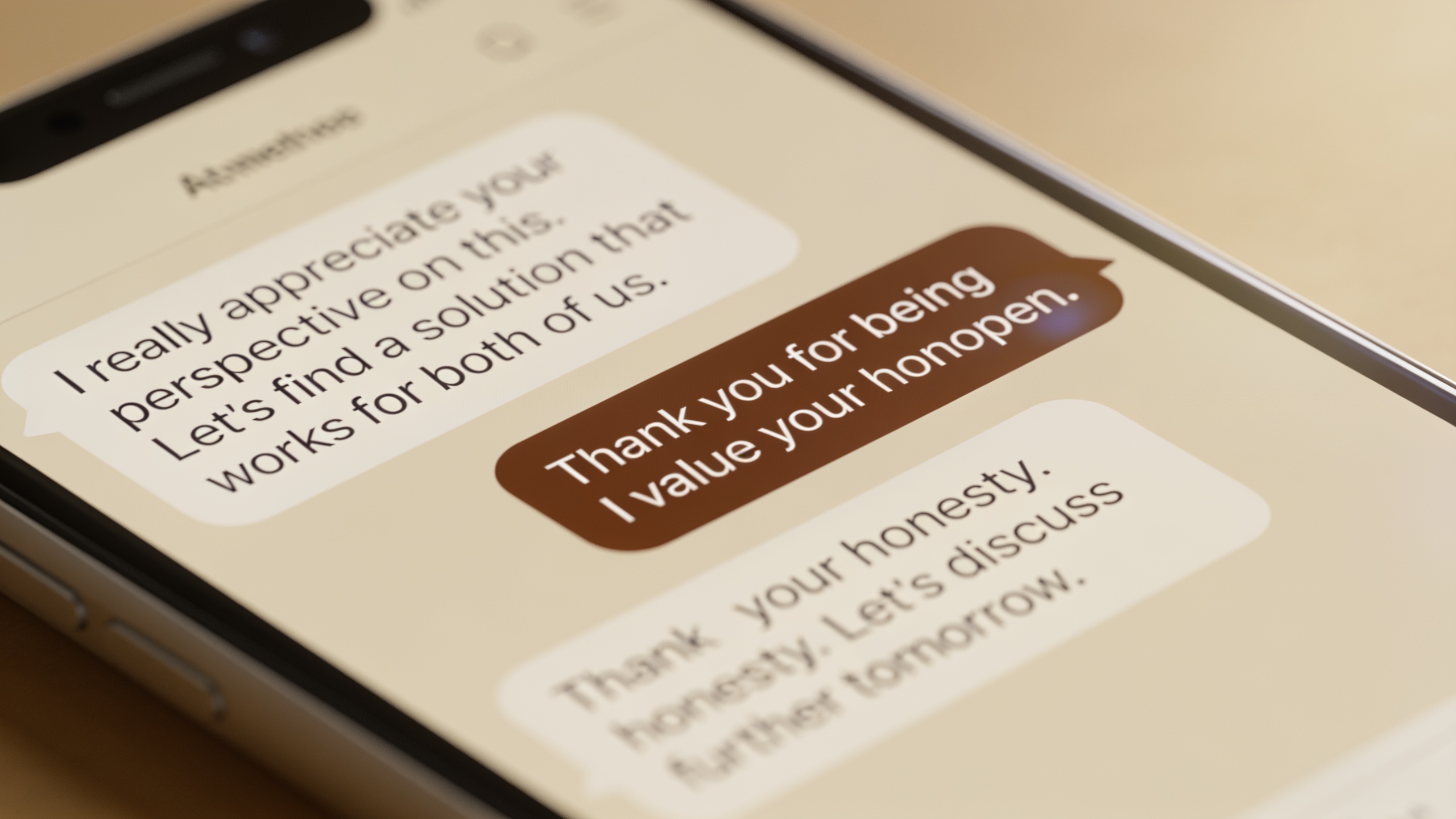
An NSA relationship should be about as easy to end as it was to start, and doing it decently mostly just means being honest, doing it in a timely way, and not ghosting if you can help it. Because these things lack the formal structure of a traditional breakup, people sometimes convince themselves they can just vanish. Don't. A short, honest message is almost always the better call, especially if you've been at this for a while.

Example of respectful text communication ending a casual relationship gracefully

The simple version: say what changed (new relationship, moving away, lost interest, life got hectic), thank them for the time if it felt real, and don't over-explain or dangle false hope about reconnecting unless you actually mean it. You don't owe anyone a long emotional talk unless you both want one. Being brief isn't rude here. It's just appropriate to what the relationship was.

Now, if it's ending because someone kept crossing a line, they wouldn't stop pushing for more, ignored the exclusivity you agreed on, disrespected a limit you clearly stated, it's fine to just say that. Straight up. Clear feedback delivered once, without theatrics, is far more useful to the other person than some fuzzy "it's not you, it's me" that leaves them guessing.

Where to Meet People Who Actually Want the Same Thing

The easiest way to keep an NSA relationship boundary-friendly from day one is to meet someone who already wants the same thing, instead of trying to convert a mismatched connection into one later. That second approach basically never works. This is where a platform built specifically for casual dating saves you a ton of friction compared to a general app where everyone's intentions are a foggy mystery.

Flirtup is one of those platforms, built entirely around meeting, chatting, and keeping things casual with real people nearby. The sign-up lets you specify who you are and who you're hoping to connect with, covering a wide range of identities and pairings, including men, women, couples, and transgender individuals. That makes it a decent starting point for singles, couples exploring non-traditional dating, and LGBTQ+ users after casual connections without having to explain or justify what they want. Since basically everyone there is looking for the same low-commitment, no-pressure vibe, the "are we on the same page?" talk kicks off from a much friendlier place than it would on an app built for people hunting down marriage.

That said, no platform sets your boundaries for you. All it can do is put you in front of people more likely to want the same arrangement. The real work still happens in the conversation between two people. Ideally before things move too fast.

FAQ

Is it normal to catch feelings in a no-strings-attached relationship?
Yep, totally normal, and honestly kind of expected. Humans bond through repeated closeness, physical and emotional, even when the plan was to keep it light. The thing that matters is being honest about it instead of burying it. If feelings show up, say so, and let the other person decide whether they want to renegotiate or bow out. Pretending nothing changed just causes more hurt down the road.

How often should we check in about boundaries in a casual relationship?
No fixed schedule, but a light check-in every few weeks works well, or whenever something shifts, like you're suddenly talking way more or someone's dating life changes. It doesn't need to be a serious face-to-face. A quick, casual question does the job.

What if my no-strings partner wants more than I do?
Say something directly, and the moment you notice it, not by slowly fading out with no explanation. A line like "I really enjoy this, but I want to keep it exactly as casual as we agreed" respects both of your time and stops the other person from investing more than the whole thing was built for.

Can a no-strings-attached relationship turn into something serious?
It can, but only through an actual conversation and mutual agreement to change the terms. It shouldn't just happen by drift or assumption. If you both want to try something more committed, that's a brand-new arrangement with its own brand-new set of boundaries, not some natural evolution of the old one.

Do boundaries make a casual relationship less fun?
No, honestly the opposite. Boundaries are exactly what let you relax and enjoy a casual thing without second-guessing every little interaction. Ambiguity kills the fun, not clarity. Knowing precisely what's expected (and what isn't) removes the anxiety, which is usually the whole point of keeping things casual in the first place.

---

An NSA relationship works best when you both treat "casual" as an actual agreement rather than a vague vibe you're each interpreting differently. Talk about what you want before things get physical, revisit it as life shifts, and respect the other person's limits as much as your own. Do that, and low-commitment dating stays exactly what it's meant to be: enjoyable, honest, and blissfully drama-free.

👉 Read More: How to Keep Things Casual


Sunday, July 26, 2026

What Is Casual Dating? A Beginner's Guide


A Beginner's Guide For Casual Dating

Casual dating is basically dating without the paperwork. Two (or more) people connect romantically or physically, minus the expectation of exclusivity, a long-term commitment, or a label anyone has to explain at Thanksgiving. If you've been wondering whether casual dating is actually a thing you'd enjoy, the honest answer is that it comes down to connection and chemistry and fun, on terms you get to set yourself, without all the weight that a "serious" relationship tends to pile on.

And it's everywhere now. Busy schedules, dating apps, and a general loosening up around what a relationship "has to" look like have all pushed casual dating into the mainstream. So let's talk about what it actually is, how it's different from the traditional route, the stuff nobody tells you, and how to try it without shooting yourself in the foot.

Table of Contents


  • What Is Casual Dating, Exactly?
  • Casual Dating vs. Traditional Relationships
  • Who Chooses Casual Dating and Why?
  • The Benefits of Casual Dating
  • Common Challenges (and How to Handle Them)
  • How Do You Start Casual Dating?
  • Unwritten Rules and Etiquette of Casual Dating
  • Frequently Asked Questions

What Is Casual Dating, Exactly?

Casual dating is a low-pressure kind of dating that's about companionship, attraction, and having a good time, not about marching toward marriage or a committed partnership. That can mean grabbing drinks with someone you matched with last week. It can also mean an ongoing physical thing with clear boundaries and zero strings. The one rule that ties it all together: everybody involved knows there's no formal commitment on the table.

Traditional dating usually has a trajectory. You start slow, you get exclusive, you start talking about the future, and so on. Casual dating just... doesn't do that. And here's the part people get wrong: it's not always a warm-up act for something serious. Plenty of people casually date on purpose, indefinitely, because that's the version of dating they actually like.

It looks different for everyone, too. Some folks casually date one person at a time. Others juggle a few. Some keep it strictly physical. None of those are more "correct" than the others.

Honestly, the defining thing isn't how much time you spend together or how often you text. It's the shared understanding that neither of you owes the other exclusivity, a title, or a five-year plan. That's the line between casual dating and a relationship that's just moving slowly.

Casual Dating vs. Traditional Relationships

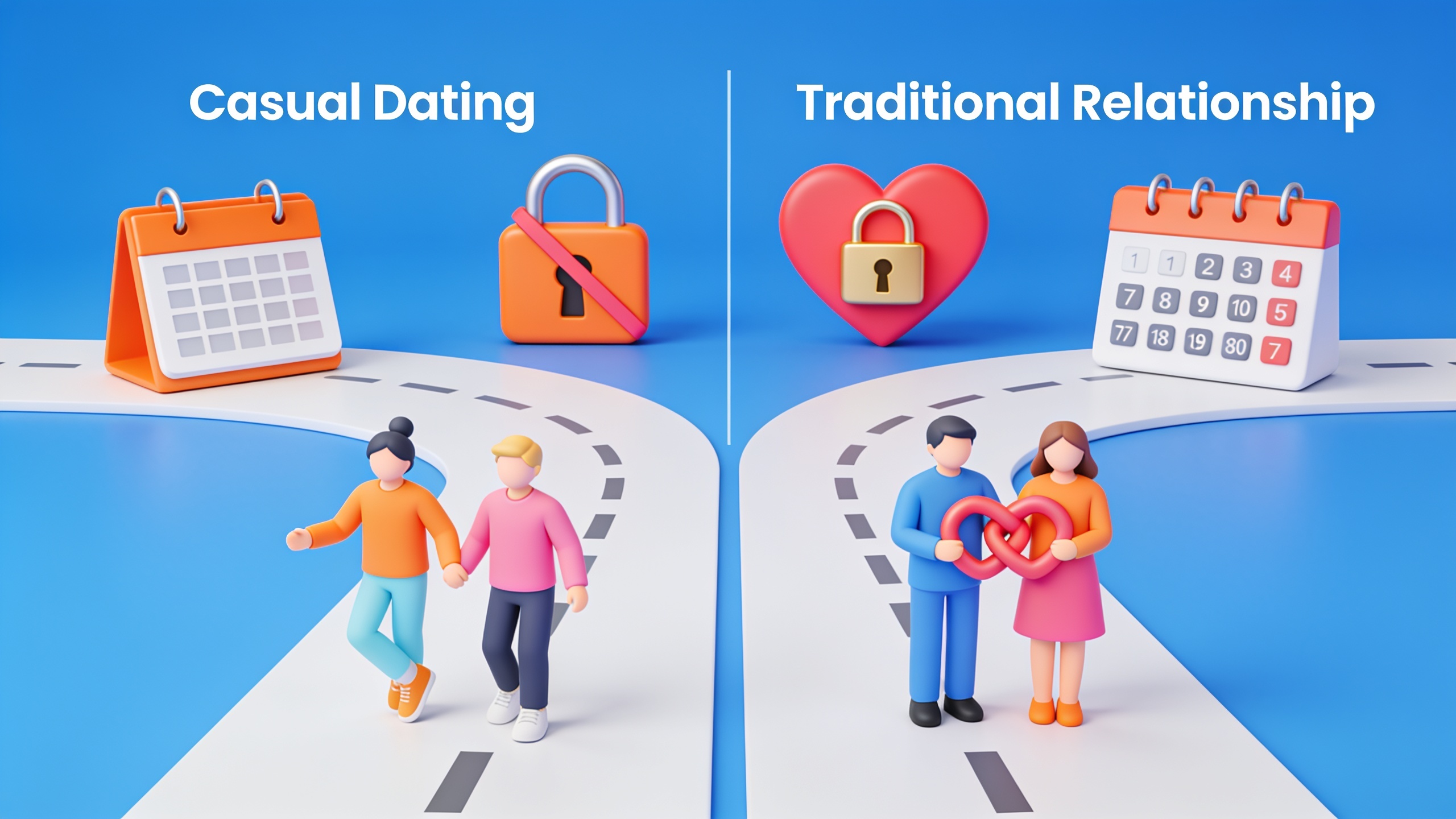
The core difference comes down to expectations: casual dating has no agreed-upon commitment or exclusivity baked in, while a traditional relationship is built around defined roles, monogamy (usually), and a shared future. Traditional relationships tend to come with the whole package. Meeting the family. Talking about milestones. An assumption of exclusivity unless somebody says otherwise. Casual dating flips all of that around. Nothing's assumed. Everything gets said out loud.

Here's a side-by-side of how the two usually stack up:

FactorCasual DatingTraditional Relationship
ExclusivityNot assumed; often non-exclusiveUsually expected once "official"
Communication frequencyFlexible, on your own termsFrequent, often daily
LabelsRarely used ("seeing each other")Defined ("boyfriend/girlfriend," "partner")
Future planningMinimal to noneCentral to the relationship
Meeting friends/familyUncommonCommon milestone
Emotional investmentLighter, boundariedDeeper, long-term focused
StructureFlexible, can change anytimeStructured with mutual expectations

Infographic comparing casual dating and traditional relationships with visual symbols for key differences

Neither one is better than the other. They just serve different goals. If you're heads-down on your career, guarding your freedom, or genuinely just want to have fun for a while, casual probably suits you. If you're trying to build a life with someone, the traditional route is the natural fit. And you can absolutely move between the two. A lot of long-term couples actually started out casual and made it official later once they figured out they wanted more.

Who Chooses Casual Dating and Why?

People choose casual dating because it fits their life, their priorities, or their emotional bandwidth better than a full-blown relationship would right now. There's no single "type" who does this. It cuts across pretty much every demographic and dating goal you can think of.

Take busy professionals. A lot of people just don't have the hours for what a traditional relationship demands. Someone knee-deep in a job hunt on a platform like Jobwatch, or grinding through a brutal promotion cycle, might not have the emotional energy for something serious. That doesn't mean they want to be alone every weekend, though. Casual dating gives them connection without blowing up their momentum at work.

Then there are the recently single. After a breakup or a divorce, most people aren't ready to cannonball into anything serious, but they still want some social and romantic life back. Casual dating lets them ease back in at their own speed, no "so what are we?" conversations required.

Couples get in on it too. Folks exploring ethical non-monogamy, open relationships, or just curious about their options together sometimes use casual dating to add a little variety without threatening their main partnership.

For a lot of people in the LGBTQ+ community, casual dating is also just a more flexible (and sometimes safer) way to explore attraction and identity, especially in places where the dating pool is smaller and finding someone compatible takes real patience.

And some people just like variety. They're not hunting for "the one" at all. They enjoy meeting new people, going on dates, feeling out different personalities and chemistry, without narrowing it down to a single person.

Platforms like Flirtup exist basically for that whole spread of people. The idea is to connect real singles and couples nearby who are upfront about wanting something casual, so nobody's left guessing what the other person is actually after.

The Benefits of Casual Dating

Casual dating gives you freedom, way less pressure, and the chance to meet new people without the obligations of a committed relationship. For a lot of folks, that combo is the whole appeal.

The freedom part is real. With no exclusivity clock ticking, you get to keep your independence intact. Socially, financially, emotionally. You can chase your own goals, keep your friendships, protect your routines, all without checking in with a partner every five minutes.

The lower emotional pressure is the other big one. Traditional relationships come loaded. Meet the parents, define the thing, plan the future. Casual dating strips most of that out and just lets a connection develop naturally, or not, without anyone rushing it.

There's also a self-knowledge angle people underrate. Dating a few people casually is a surprisingly good way to figure out your actual preferences, your real dealbreakers, what compatibility even means to you, all before you commit to anything. Low stakes, high learning.

And it flexes around your life instead of rearranging it. Work, friends, hobbies, side projects. A casual arrangement bends to your availability rather than demanding a fixed schedule.

Oh, and one more thing: casual can turn into something more if you both decide you want that. Because there's less pressure early, some couples end up building on a more honest foundation than they would've otherwise. Not the goal for everyone. But it happens.

Common Challenges (and How to Handle Them)

The biggest headaches in casual dating almost always trace back to mismatched expectations, fuzzy communication, or one person catching feelings the other one didn't. Common stuff. Also very fixable.

Mismatched expectations is the classic. One person is quietly hoping this turns into a relationship while the other genuinely just wants it light. The fix is boring but it works: talk about what you each want early, and check back in every so often as feelings or circumstances shift.

Attachment sneaks up too. Even in the most casual setup, feelings can grow. If you notice yourself getting jealous or way more invested than you signed up for, that's your cue to pause and ask whether casual still fits what you actually need.

Safety's a legitimate concern, especially with apps. Meet in public for the first few dates. Tell a friend where you're going. Trust your gut if something feels off. And keep your personal stuff (last name, workplace, home address) close to the chest until you actually trust the person. Basic, but people skip it constantly.

There's still some social stigma, weirdly. Even though casual dating is everywhere now, some friends or family or coworkers still treat it like a lesser thing. My honest take? That's their problem, not yours. Being confident in your own choices, and hanging around communities that don't judge it, takes most of the sting out.

Last one is time management. Balancing casual dating with work and friends and your own downtime takes a little intention. Treat it like anything else on your calendar. Set boundaries on how much time and energy you're willing to give, and don't let it swallow everything else.

How Do You Start Casual Dating?

The best way to start is to get clear on what you want, pick a platform or setting where casual is the norm, and be honest about your intentions from the very first conversation. Vague signals and crossed wires cause basically all casual dating drama. Clarity up front saves everyone a ton of grief.

Figure out what you're actually after. Before you swipe on a single person, get specific with yourself. Purely physical? A recurring dinner date, no strings? A few casual things at once? Knowing your own boundaries makes it a hundred times easier to tell someone else what they are.

Pick the right platform. Not every app is built for this. A lot of the mainstream ones lean hard toward people hunting for The Relationship, and that mismatch gets old fast. Something like Flirtup is designed specifically for casual dating and non-traditional setups, which means less time explaining yourself and more time meeting people who already get it.

Say it in your profile and early on. State your intentions plainly, without over-explaining or apologizing. Something as simple as "Looking for casual dating, not seeking anything serious right now" quietly filters out the mismatches before you've wasted an evening.

Keep the first few dates chill. Coffee, drinks, some low-key activity. Save the deep future-planning talks for later, if they ever come up at all. You're feeling out chemistry, not interviewing a candidate for a life partner slot.

Check in now and then. Even casual arrangements benefit from the occasional honest chat, especially if you're seeing each other more or feelings start to wobble. A quick "hey, are we still on the same page?" keeps it transparent and stops anyone from getting blindsided.

And don't sleep on the practical stuff. The little things punch above their weight on early dates. If you're hosting someone at your place, small touches genuinely matter. Freshly painted walls from a service like Minneapolis House Painting, or a tidy yard (extra relevant if you've got a dog, which is where a service like Scoop Rangers earns its keep) can make a home feel way more inviting without much effort on your end. First impressions still count, casual or not.

Unwritten Rules and Etiquette of Casual Dating

Casual dating runs smoothest when both people stick to a few informal ground rules: honesty about intentions, respect for boundaries, and steady communication about expectations. Nobody's enforcing these. But ignoring them is the fastest route to confusion and hurt feelings.

Honesty beats assumptions, always. Never assume the other person knows what you want. Say it. And if your feelings change, whether you want more or want out, say that too.

Respect the exclusivity terms you agreed to. If you're both seeing other people, don't guilt-trip your partner about it unless you actually agreed to be exclusive. The whole thing only works when everyone honors the deal they made.

Two people having an honest conversation about relationship expectations over drinks

Be safe about the physical side. That means safer sex, regular testing if you're active with more than one person, and being upfront about your sexual health with anyone you're involved with. Not romantic, I know. Still non-negotiable.

Don't ghost. Even casual connections deserve a real ending. "I've had a good time, but I think I'm ready to move on" takes ten seconds and is infinitely kinder than just vanishing.

Keep jealousy in check. If you or your partner are dating around, try not to let jealousy run the show. And if jealousy keeps flaring up, that's usually a sign that casual isn't the right fit for you at the moment, which is fine, just worth being honest with yourself about.

Match the effort. Casual doesn't mean careless. Show up on time, communicate like an adult, treat the person with the same basic respect you'd want in any relationship. Just minus the long-term commitment.

Funny enough, the same things that make businesses succeed online (clarity, consistency, real communication) apply just as much here. A platform like RobinRank helps companies stay clear and consistent with their audience through smart, automated content strategies. Being clear and consistent about your own dating intentions does the same job for you: it pulls in the right matches instead of burning your time on the wrong ones.

Frequently Asked Questions

Is casual dating just a fancy word for a hookup?

Not really. A hookup is usually a one-off physical thing with little to no ongoing connection. Casual dating can involve repeated dates, actual conversations, even some emotional closeness. It just skips the formal commitment and exclusivity of a traditional relationship. Depending on what you both agree to, it can be purely physical, purely social, or a mix of both.

Can a casual thing turn into a real relationship?

Yep, happens all the time. Plenty of committed relationships start as casual arrangements that shift once both people realize they want more. The trick is open communication. If one or both of you starts wanting exclusivity or a label, have the conversation instead of assuming the other person's on the same wavelength.

How many people can you casually date at once?

There's no magic number. It depends entirely on what you can comfortably manage and what you've agreed to with each person. Some people keep it to one at a time just to keep things simple. Others see several people at once, and that's totally fine as long as everyone involved knows and is cool with it.

Is casual dating safe?

It can be just as safe as any other kind of dating if you take some basic precautions. Meet in public early on, tell a friend your plans, use reputable platforms, and practice safer sex if things get physical. A lot of the better casual dating platforms come with safety features like photo verification and reporting tools, which give you a bit more of a cushion than meeting total strangers offline.

How do I tell someone I only want something casual?

Direct but kind is the move. Something like, "I'm really enjoying spending time with you, and I want to be upfront that I'm looking for something casual right now, not a committed relationship." Clear, no cruelty. Say it early, ideally before feelings get deep, and you dodge a ton of misunderstandings while giving the other person a fair shot to decide if that works for them too.

Finding Your Own Rhythm

Casual dating isn't a watered-down version of "real" dating. It's just a different framework, built on honesty, flexibility, and mutual respect instead of preset labels and timelines. Busy professional, freshly single, one half of a couple exploring new dynamics, someone in the LGBTQ+ community after a genuine connection with zero pressure. Whatever your situation, casual dating bends to fit it. And the single most important ingredient was never the label anyway. It's the honesty you bring to every conversation along the way.

👉 Read More: Casual Dating Etiquette


Monday, May 5, 2025

No Strings Attached: What It Really Means & Drama-Free Rules


No Strings Attached: What It Really Means, How It Works & Rules to Keep It Drama-Free

I've always been fascinated by expressions that capture a lifestyle of freedom and uncomplicated connections. When I first heard the phrase "no strings attached," I was struck by its promise of simplicity. Over time, I've come to appreciate the depth of this idiom and how it applies to relationships, pop culture, and even everyday products. In this article, I reveal what "no strings attached" means, the way it translates into different contexts, and the challenges and joys of maintaining a truly casual arrangement. Read through to learn how this concept functions in various realms while keeping things refreshingly drama-free.

I invite you to join me on this exploration through language, relationships, and cultural impact. By dissecting everything from its origins to its modern-day usage, you'll gain insights that can help you design a lifestyle or relationship that's as uncomplicated as its name suggests. So, let's dive deep into this fascinating concept.

What Is "No Strings Attached"? Understanding the Core Concept

What Is "No Strings Attached"? Understanding the Core Concept


Definition and Origin

The phrase "no strings attached" signifies an offering or arrangement free from hidden conditions or obligations. Its literal roots may be traced back to 18th‑century fabric merchants who tagged rolls of cloth with strings to mark any imperfections. When customers asked for fabric "with no strings attached," they sought material that was flawless and free of additional conditions. I find it intriguing how a practical method in the trade evolved into a metaphor that many of us now use in everyday communication. The visual of puppets without their guiding strings further reinforces the idea of independence from controlling influences.

This idiom now appears in a variety of contexts—whether it's describing a free giveaway or an agreement where there are no reciprocal commitments. Over time, the phrase has come to represent any arrangement that avoids the burden of future obligations, resonating with people who want to enjoy something without being tied down by strings, both literally and figuratively. For me, the beauty of this expression rests in its simplicity: it invites an approach to life that prioritizes freedom and clarity. I appreciate how this clear-cut notion can apply across different experiences—reminding us that not every promise or situation requires a hidden catch or long-term commitment.

What makes the phrase so timeless in its appeal?

The charm of the phrase lies in its versatility. From marketing to personal relationships, the idea always centers on enjoying an experience as it is meant to be—light, spontaneous, and without unexpected strings. It invites us to take things at face value, and that is something I find both practical and appealing.

NSA in Relationships: Beyond the Idiom

When it comes to relationships, "no strings attached" (NSA) has a very precise meaning. I have seen NSA relationships defined as a physical connection devoid of emotional intimacy, commitment, or exclusivity. In these setups, the focus is on enjoying the moment rather than planning a future together. For many, including myself at one time, such arrangements are attractive because they offer the best of both worlds—a fulfilling physical experience paired with personal freedom. In these relationships, both parties share a common understanding that while intimacy is on the table, the emotional side is kept off-limits.

This arrangement works best when both of us are clear that no emotional ties or promises of future togetherness are expected. We agree to keep things simple: dates are casual, there's no pressure to be available at all times, and both individuals continue their other relationships or interests. I find that it can be liberating to accept physical affection on its own without the need for additional commitments. However, while it sounds straightforward, the practicality of maintaining such boundaries demands continuous honest conversation and self-awareness.

Can anyone truly separate physical intimacy from emotional connection?

I believe that NSA relationships underline a modern approach to dating and connection. They appeal to those who wish to explore physical connections without the responsibilities and complications of traditional commitments. Yet, I've also learned that the very freedom that defines these relationships can sometimes blur emotional lines if one isn't careful. For this reason, staying vigilant about one's innermost feelings is essential if you opt for an arrangement that promises no strings attached.

Distinguishing NSA from Friends with Benefits

Distinguishing NSA from Friends with Benefits

There is a subtle difference between a no strings attached arrangement and a friends with benefits (FWB) scenario. In my experience, FWB relationships begin between friends who already share a level of emotional rapport and trust. This pre-existing bond means that even when intimacy is introduced, there is an underlying emotional connection and mutual respect that is hard to ignore. On the other hand, NSA relationships typically embark on a foundation of minimal familiarity, built almost solely on a physical connection without shared history.

While both arrangements emphasize casual intimacy, NSA is typically more about convenience and satisfying momentary desires without any consideration of friendship or future planning. I've noticed that NSA relationships carry less baggage when it comes to emotional expectation, whereas FWB dynamics may evolve naturally into something deeper due to the existing closeness. For me, understanding this distinction is critical. It ensures that I am clear about what I want from an encounter and helps manage expectations from both sides. Ultimately, the key difference lies in the nature of the interaction—friends with benefits carry an emotional undercurrent that NSA intentionally avoids.

The Appeal and Challenges of No Strings Attached Relationships

The Appeal and Challenges of No Strings Attached Relationships


Why People Seek NSA Connections

I have seen firsthand why many people choose NSA relationships. For some, the idea of engaging in a purely physical encounter without the complexity of emotional commitment offers a refreshing change. People with busy schedules, strong personal networks, or those focused on self-growth might find that a casual, no strings attached arrangement fits perfectly into their lifestyles. It creates a space where one can relish intimacy without the ever-looming pressure of planning a future together. In my own journey, the freedom to meet different people without sweating over potential complications has often been a welcome respite.

There is also the element of personal exploration that many find appealing. The absence of commitment means that both individuals can explore their desires and connect with multiple partners without conflict or guilt. I appreciate that many seek NSA arrangements to maintain flexibility—allowing for spontaneity and the chance to discover what they really want from intimacy without having to invest emotionally right away. This type of connection offers a blend of excitement and relief from traditional relationship pressures, enabling a focus on the moment rather than on long-term outcomes.

How does an NSA relationship differ from simply being single?

Moreover, a no strings attached setup helps keep expectations minimal. Both parties agree from the start that the arrangement is meant for casual enjoyment—a concept I find liberating. The emphasis here is solely on the present, rather than future promises, which in turn reduces the potential for disappointment linked to unmet expectations.

The Potential Pitfalls and Emotional Risks

Despite the attractive benefits, NSA relationships are not without their risks. I have observed that one of the most significant challenges is the possibility of one party developing deeper emotional feelings while the other maintains a strictly physical perspective. This imbalance can lead to hurt feelings, confusion, and heartache—problems that I have seen arise time and again in these scenarios. When intimacy becomes a regular part of your life, it is hard to shield yourself completely from emotional entanglements, even if you set out with clear intentions.

Another drawback is the potential impact on future relationships. Focusing solely on casual setups might limit opportunities to build a more serious connection later on. Some of my peers have found difficulty in transitioning from a no strings attached encounter to a committed relationship, largely due to the emotional distance that had been established early on. Additionally, I've noticed that without regular, clear communication, misunderstandings can quickly escalate into conflicts or even lead to physical risks if safe sex practices are not followed strictly.

Is it possible to completely compartmentalize emotions in an intimate relationship?

Furthermore, the casual nature of these arrangements can sometimes lead to situations where one partner inadvertently invests more time or emotional energy than intended. Even with upfront agreements, the heart tends to have its own ideas, and it may begin to lean towards wanting something more substantial. I believe that self-awareness and regular evaluation of your feelings are essential to maintaining a healthy NSA relationship. It is critical to acknowledge and address these pitfalls early to avoid long-term emotional fallout.

Navigating NSA: Essential Rules for a Drama-Free Experience

Setting Clear Expectations from the Start

In my experience, setting down clear expectations is the cornerstone of a drama-free NSA arrangement. I always make it a point to have an open conversation before diving into anything physical. Both parties need to explicitly discuss what they want and the boundaries they intend to maintain. When expectations are set early, it minimizes misunderstandings and prevents any surprise emotional entanglement. I find that clarity at the beginning helps reinforce the intent of the arrangement and reduces the potential for confusion as the relationship progresses.

It is important for both individuals to firmly agree on details like:

• Frequency of meet-ups
• Exact nature of interactions
• Freedom to see other people
• Communication boundaries

This dialogue should be honest and ongoing, ensuring that if circumstances change, adjustments can be made without hurt feelings.

Prioritizing Safety and Respect

For me, mutual respect and safety are non-negotiables, even in a casual setup. Prioritizing physical safety through consistent use of protection is paramount. I always ensure that my partner and I have a candid conversation about sexual health and STI testing. Our agreement encompasses not only respect for physical boundaries but also emotional care, even if the sentiment expressed remains limited to the current situation.

Respect translates into understanding personal space and privacy as well. Both of us should feel comfortable with the pace at which the relationship advances, and I believe that showing genuine care—even in a no-strings attached context—helps maintain a respectful and mutually beneficial interaction.

Managing Emotions and Knowing When to End It

Managing emotions in an NSA relationship requires keen self-awareness and honest dialogue. I always check in with myself to ensure that I remain true to my original intent of keeping the relationship casual. Recognizing early signs of developing feelings is crucial, as it often signals that the arrangement may no longer be working for one or both parties. Regular check-ins with your partner can help ascertain if the current setup still meets your needs or if boundaries need revisiting.

When do you know it's time to walk away from an NSA relationship?

Signs it's time to end an NSA relationship:

• Developing deeper feelings
• Communication breakdown
• Changing personal priorities
• Increasing demands for time/attention

Equally important is knowing when to gracefully end the arrangement. I believe that having a pre-discussed exit strategy prevents awkward or painful situations. If emotions begin to surface or if communication starts to falter, it's best to conclude the connection respectfully rather than letting it evolve into something more complicated. This proactive approach allows both partners to part ways without lingering hurt or resentment, keeping the spirit of a no strings attached experience intact.

Casual Hookups®: Connecting You for No Strings Attached Encounters

Connecting You for No Strings Attached Encounters

I have seen firsthand how Casual Hookups® revolutionizes the way people pursue NSAs. As an online dating platform tailored for those looking for casual relationships, Casual Hookups® provides a space where everyone understands that the primary goal is to enjoy connections without the pressure of commitment. I appreciate that this platform designs its entire interface to attract individuals who share the same intent, filtering out any ambiguity regarding relationship expectations.

The platform makes it incredibly easy to create a profile, browse local singles, and start conversations that are straightforward and to the point. Casual Hookups®' streamlined messaging and communication tools have simplified finding potential partners near you. I have noticed that the free online dating aspect is particularly appealing; the ease of access combined with strict privacy measures ensures that personal information is kept safe and secure.

Casual Hookups® fosters a judgment-free environment. Its inclusivity means that whether you are a senior, a person from any ethnic background, or someone with unique personal preferences, the platform welcomes you. I personally find the focus on local connections to be a tremendous advantage. It saves time and energy by facilitating meetings with people in your immediate area, ensuring that a casual encounter remains exactly that—casual and accessible.

The unique value of Casual Hookups® is evident in its user testimonials. I have read stories from members who found exactly what they were looking for—a straightforward path to a fun, unencumbered experience. Testimonials from users in various cities highlight how quickly and effectively they connected with like-minded individuals. This success is largely due to the platform's clear guidelines, secure verification processes, and continuous focus on creating a community rooted in mutual understanding of a no strings attached relationship.

By creating a space explicitly designed for casual encounters, Casual Hookups® reinforces the idea that you can pursue emotional and physical freedom without getting overwhelmed by commitment. For me, knowing that there is a tailored solution for casual dating brings peace of mind, allowing me to explore connections without the distraction of relationship drama. It is a true embodiment of no strings attached in the world of modern dating.

"No Strings Attached" in Pop Culture: Film and Music

The 2011 Film: "No Strings Attached"

I have always found it fascinating how pop culture appropriates everyday phrases, and the 2011 film "No Strings Attached" is a prime example. Directed by Ivan Reitman and starring Natalie Portman and Ashton Kutcher, the movie explores the concept of a strictly physical relationship without emotional entanglement. In the film, two friends decide to embark on a sexual arrangement based solely on companionship in the moment, intending to keep feelings at bay. I admired the film's attempt to present a realistic yet humorous look at casual intimacy, even though it sometimes fell into predictable territory.

The film highlights the inherent difficulties in compartmentalizing emotions. I recall how, despite the initial agreement of keeping things simple, both characters eventually experienced the inevitable pull of romantic attachment. This tension between desire and duty creates a relatable narrative, capturing the modern-day dilemma of separating physical pleasure from deeper emotional needs. I was struck by how the storyline questioned whether it is truly possible to engage in intimacy without risking emotional involvement.

Why do these arrangements so often evolve into something more in movies, but not always in real life?

From a commercial perspective, the film achieved significant success, grossing nearly $150 million worldwide, and thereby confirming that the concept resonates with audiences. Critics acknowledged the chemistry between the leads, even as some pointed out that the script adhered to familiar rom-com tropes. For me, the film remains a memorable exploration of what it means to pursue a relationship on strictly physical terms, reminding us that even the best-laid plans can be upended by unexpected feelings.

NSYNC's Landmark Album

Reflecting on another cultural milestone, NSYNC's album "No Strings Attached" stands as an iconic testament to creative freedom. Released in 2000, the album not only redefined pop music but also symbolized the band's escape from restrictive management. I was inspired by how the title encapsulated the idea of breaking free—a direct nod to the absence of limitations that the phrase represents. The album incorporated a mix of R&B elements, dance beats, and catchy hooks that spoke to a generation hungry for change.

The impact of the album was profound. With record-breaking first-week sales of over 2.4 million copies in the United States alone, it set a new benchmark in the music industry—a record that stood for nearly 15 years. I find it remarkable that the album not only achieved massive commercial success but also earned critical acclaim for its innovative sound and fresh direction. NSYNC's willingness to experiment and shed old limitations resonated with fans worldwide, making the album a defining moment in pop culture.

The significance of NSYNC's "No Strings Attached" extends beyond its numbers. It became a cultural reference point for freedom and autonomy in both music and personal expression. For me, the album illustrates how the ethos of "no strings attached" can empower artists to reinvent themselves and break new ground—an inspiration that continues to influence modern pop music.

Beyond Relationships: Other Uses of "No Strings Attached"

In Commercial Branding and Products

I have noticed that the appeal of the phrase "no strings attached" is not confined to relationships—it finds a place in commercial branding too. For instance, some products are marketed with this phrase to highlight their simplicity and absence of hidden extras. A fabric labeled as having no strings attached suggests that it is free of flaws and complexities, appealing to consumers looking for straightforward quality. I appreciate how companies use this concept to assure buyers that what they receive is exactly as advertised, with no surprises or hidden costs.

The phrase in this context conveys transparency and reliability. For me, it underscores the idea that simplicity in design often leads to a better user experience. Consumers are drawn to products that promise clarity and minimalism—qualities that resonate with the core notion of "no strings attached." It is a clever use of language that turns an idiom into a mark of quality and trustworthiness in the marketplace.

In Digital and Social Applications

In the digital arena, the concept of no strings attached has gained new life, particularly in dating and social networking applications. I have seen numerous platforms explicitly promoting themselves as spaces for casual, uncommitted relationships. For example, Casual Hookups® is a leading platform that caters specifically to those seeking no strings attached connections. By providing clear profile settings and robust communication tools, such apps help users quickly identify like-minded individuals without wading through mixed signals.

These digital solutions are designed with simplicity and speed in mind, making it easier than ever to meet local singles who share the same intent of keeping things casual. I find that these platforms reduce the time and energy usually spent on traditional dating by directly matching people who desire an uncomplicated, spontaneous encounter. The promise of privacy, secure data handling, and a user-friendly interface adds to the appeal, making these apps a favourite among those who value efficiency and discretion.

How has technology changed the landscape of no strings attached relationships?

Furthermore, the social application of this phrase extends beyond dating. In online marketplaces and service platforms, "no strings attached" is sometimes used to indicate that offerings come with a straightforward pricing model and no hidden fees. For me, this broad digital usage reinforces how the concept has permeated various aspects of modern life—transforming the way we approach everything from personal relationships to everyday transactions.

Conclusion

In reflecting on the diverse applications of "no strings attached," I see a concept that has matured from a simple idiom into a cultural symbol of freedom and clarity. Whether it applies to relationships, pop culture, or commercial products, the phrase embodies the idea of enjoying an experience without being burdened by hidden obligations. I have learned that while NSA relationships can offer much-needed liberation, they require open communication and self-awareness to avoid potential pitfalls.

The exploration of NSA in film, music, and digital applications underscores a broader societal shift towards valuing immediate gratification and personal autonomy. The insights shared here serve as a reminder that maintaining clear boundaries is just as important as seeking freedom. For me, embracing the "no strings attached" lifestyle means celebrating simplicity while staying mindful of emotional and physical well-being. It is a testament to the evolving ways we value both personal independence and honest connections in our daily lives.

FAQs

What is the main difference between no strings attached and friends with benefits?

The primary difference lies in the initial relationship foundation. In my experience, friends with benefits involves people who already share an emotional bond and mutual respect before engaging in casual sex. This prior connection often means that even when the arrangement is strictly physical, there is an undercurrent of familiarity and shared history. In contrast, a no strings attached relationship is typically established as a purely physical encounter without a pre-existing friendship or emotional investment. I find that this subtle distinction helps set expectations and maintain clarity from the start.

Can a no strings attached relationship develop into a serious one?

Though the intention of a no strings attached relationship is to keep things casual, it is possible for deeper feelings to develop over time. I have observed that prolonged exposure to physical intimacy can sometimes awaken unexpected emotions. If one person begins to view the arrangement as more than just physical, the balance can shift, leading to potential emotional complications. In my view, staying honest with oneself and communicating openly with your partner can help mitigate these risks. However, the possibility always exists that what starts as a casual encounter may evolve into something more serious inadvertently.

What are the most important rules for a successful NSA relationship?

Clear communication stands out as the most important rule in maintaining a no strings attached relationship. I believe that discussing expectations and boundaries from the very beginning is essential to keep misunderstandings at bay. It is crucial to agree on aspects such as exclusivity, safe sex practices, and the frequency of meetings. Additionally, I stress the importance of periodic check-ins to ensure that both parties remain comfortable with the arrangement. Honesty with oneself about whether you can keep emotions separate from physical interactions is also key. These rules support keeping the connection loose and stress-free.

Are there any potential negative consequences of an NSA relationship?

Yes, there are potential downsides. From my perspective, one of the most significant risks is the unintentional development of deeper feelings that are not reciprocated. This can lead to emotional pain and confusion over time. There are also physical health risks if safety measures like protection and regular testing are neglected. Beyond that, spending too much time in a casual arrangement might close off opportunities for more serious, committed relationships if that is desired later on. Open and honest communication, along with self-awareness, is crucial to manage these risks effectively.

👉 Explore No Strings Attached Dating Now — 100% Discreet & Hassle-Free 🔥
Looking for a no strings attached connection? Click here to join the platform that makes casual dating easy and drama-free.
This is an affiliate link — we may earn a small commission at no extra cost to you.


Saturday, April 26, 2025

10 Proven Dating Tips for Shy Guys Who Want to Attract Their Dream Partner


10 Proven Dating Tips for Shy Guys Who Want to Attract Their Dream Partner

Navigating the world of dating can be daunting, especially for those who are introverted or shy. The fear of rejection, awkward encounters, and the pressure to make a good impression can be overwhelming. However, with the right approach and mindset, shy individuals can overcome their challenges and successfully attract their dream partner.

best dating tips for shy guys

For shy guys, the key to successful dating lies in building confidence, being genuine, and understanding what works best for them. By adopting practical dating tips for shy guys, they can enhance their dating experience and increase their chances of forming meaningful connections.

Key Takeaways

  • Understand the challenges shy guys face in dating and how to overcome them.
  • Learn effective strategies to boost confidence in dating scenarios.
  • Discover the importance of being genuine and authentic in your approach.
  • Explore practical tips to improve your dating life and attract your dream partner.
  • Gain insights into making a lasting impression on your date.

The Shy Guy's Dating Advantage: Why Your Quietness Can Be Attractive

Contrary to popular belief, shy guys have a distinct edge when it comes to dating, thanks to their thoughtful and observant nature. While being outgoing is often seen as a key to dating success, shy men possess unique qualities that can make them highly attractive to potential partners. Their quiet demeanor can be a refreshing change in a world where loud and boisterous personalities often dominate social scenes.

Common Misconceptions About Shy Men in Dating

Many people mistakenly believe that shy men are not confident or are uninterested in others. However, shyness is not the same as lack of confidence or interest; it's often just a different way of expressing oneself. Shy men may take longer to open up, but when they do, they can form deep and meaningful connections.

The Hidden Strengths of Introverted Men

Introverted men often possess hidden strengths that are highly attractive, such as being good listeners and having a thoughtful approach to relationships. These traits allow them to build strong, meaningful connections with others. Their introverted nature also means they are often more observant and empathetic.

Why Many Women Prefer Thoughtful, Quiet Partners

Many women appreciate thoughtful and quiet partners because they tend to be more reliable and genuinely interested in getting to know them. These men are often more inclined to listen actively and respond thoughtfully, creating a deeper and more satisfying connection. In a world filled with superficial interactions, a shy guy's quiet nature can be a breath of fresh air.

1. Build Self-Confidence Through Small Daily Actions

Self-confidence isn't something you're born with; it can be developed through deliberate actions and practices. For shy guys, building self-confidence is a crucial step in becoming more attractive to their dream partner. By incorporating small daily actions into your routine, you can significantly boost your confidence levels.

Confidence-Building Exercises Anyone Can Do

Engaging in simple exercises can help build confidence. For instance, positive self-talk can rewire your brain to focus on your strengths. Try standing in front of a mirror every morning and affirming your worth with statements like "I am capable and deserving of love." Additionally, practicing power posing can make you feel more confident. Stand tall with your feet shoulder-width apart and hands on hips for a few minutes daily.

How to Project Confidence Even When You Don't Feel It

Projecting confidence is just as important as feeling it. One effective way to do this is by maintaining eye contact during conversations. It shows that you're engaged and interested in the other person. Another technique is to speak clearly and at a moderate pace, avoiding filler words like "um" or "ah." Practicing these skills in low-stakes situations can help you feel more confident in your ability to interact with others.

Transforming Negative Self-Talk Into Positive Affirmations

Negative self-talk can be a significant barrier to building self-confidence. To overcome this, it's essential to become aware of your inner dialogue and challenge negative thoughts. Replace critical inner voices with positive affirmations. For example, if you catch yourself thinking "I'm not good enough," reframe it as "I am worthy and capable." Repeating these affirmations daily can help shift your mindset towards a more positive and confident one.

Confidence-Building ActivityDescriptionFrequency
Positive Self-TalkStand in front of a mirror and affirm your worth.Daily
Power PosingStand tall with feet shoulder-width apart and hands on hips.Daily
Eye Contact PracticeMaintain eye contact during conversations.During interactions

2. Master the Art of Conversation With Simple Techniques

Mastering conversation is a crucial skill for shy guys looking to make a lasting impression on their dream partner. Developing effective conversation skills can make a significant difference in how others perceive you.

Conversation Starters That Actually Work

Using the right conversation starters can ease the pressure of initial interactions. Simple questions about the other person's interests or comments on the surroundings can be great icebreakers. For instance, asking "What's your favorite hobby and why do you enjoy it?" can lead to engaging discussions.

Active Listening: Your Secret Weapon

Active listening involves fully concentrating on what the other person is saying, understanding their perspective, and responding thoughtfully. This technique not only makes the other person feel valued but also gives you time to formulate your response, reducing anxiety.


Recovering From Awkward Silences Gracefully

Awkward silences are inevitable, but they don't have to be detrimental. The key is to recover gracefully by either changing the subject or making a light-hearted comment. Practicing how to handle these moments can make you more confident in your ability to navigate conversations smoothly.

By incorporating these simple techniques into your daily interactions, you'll become more comfortable and confident in your conversation skills, making it easier to connect with others.

3. Create an Authentic Online Dating Profile That Stands Out

Creating a standout online dating profile is crucial for shy guys looking to attract their dream partner. In today's digital age, your online presence can be the first impression potential matches have of you, making it a vital tool in your dating arsenal.

Profile Photo Tips for Shy Guys

For shy guys, a profile photo can be daunting. Use a recent, clear photo that shows your face and personality. Avoid overly filtered or misleading images. A genuine smile can go a long way in making a good first impression.

Writing a Bio That Attracts the Right Partner

Your bio should reflect your personality and interests. Be authentic and concise, highlighting what makes you unique. Mention your hobbies, passions, or what you're looking for in a partner.

Messaging Strategies That Get Responses

When messaging potential matches, personalize your approach. Reference something from their profile to show you're genuinely interested. Keep your messages light and engaging, avoiding generic openers.

Profile ElementTips for Shy GuysBenefits
Profile PhotoUse a clear, recent photo with a genuine smileAttracts like-minded individuals
BioBe authentic, mention hobbies and passionsShows your personality
MessagingPersonalize messages, reference their profileIncreases response rates

4. Leverage Your Natural Strengths and Interests

Your unique strengths and interests can be your greatest assets in dating. By focusing on what you're passionate about, you not only become more attractive to like-minded individuals, but you also build confidence in yourself.

Finding Dating Opportunities Through Hobbies

Engaging in your favorite hobbies can naturally lead to dating opportunities. Whether it's joining a book club, participating in outdoor activities, or attending cooking classes, being around people with similar interests increases your chances of meeting someone special.

How to Shine When Talking About Your Passions

When discussing your passions, enthusiasm is key. Share your experiences and the reasons behind your interests. This not only showcases your personality but also gives potential partners insight into your values and what drives you.

Using Your Expertise to Build Connection

Your areas of expertise can serve as a strong foundation for building connections. By sharing your knowledge, you can create meaningful interactions. For instance, if you're knowledgeable about photography, discussing the best practices or sharing tips can be a great conversation starter.

HobbyPotential Dating OpportunitiesConversation Starters
PhotographyPhotography clubs, workshops"Best camera settings for landscape photography?"
CookingCooking classes, food festivals"What's your favorite cuisine to cook and why?"
HikingHiking groups, outdoor events"Have you hiked any trails recently that you'd recommend?"

5. The Best Dating Tips for Shy Guys to Make a Great First Impression

First impressions matter, and for shy men, it's about turning initial awkwardness into a charming encounter. Making a great first impression is not just about being outgoing; it's about showcasing your genuine self with confidence.

Dress for Success: Style Tips for Shy Men

Your attire can significantly impact how others perceive you. For shy men, dressing well can be a confidence booster. Opt for clothes that fit well and reflect your personality. Simple, classic styles often make a stronger impression than trendy pieces. Pay attention to grooming as well; a well-groomed appearance shows you're detail-oriented and care about how you present yourself.

Body Language Hacks That Show Confidence

Confident body language can make you appear more approachable and attractive. Maintain good posture and use open gestures. Avoid crossing your arms or legs, which can give the impression of being closed off. Practice power poses before your date to boost your confidence.

The Power of a Genuine Smile and Eye Contact

A genuine smile can instantly make you more likable. Combine it with appropriate eye contact, and you've got a winning combination. Eye contact shows you're engaged and interested in the other person. Remember, it's about balance; too much eye contact can be intimidating, while too little may suggest disinterest.

By incorporating these tips, shy guys can make a great first impression and set the stage for a meaningful connection.

6. Navigate First-Date Anxiety With These Proven Strategies

First-date jitters are natural, but knowing how to manage them can make all the difference in creating a memorable date. By being prepared and using the right techniques, you can turn what might be a nerve-wracking experience into an enjoyable encounter.

Pre-Date Preparation to Calm Your Nerves

Preparation is key to reducing first-date anxiety. Start by planning your outfit in advance to avoid last-minute stress. Choose an outfit that makes you feel confident and comfortable. Additionally, take some time to research the date venue, understand how to get there, and plan to arrive a few minutes early. Deep breathing exercises and positive self-talk can also help calm your nerves before the date.

Recovery Techniques When Anxiety Strikes

If you start to feel anxious during the date, there are several techniques you can use to recover. Take a moment to excuse yourself and do some quick deep breathing exercises. You can also use positive visualization to imagine a positive outcome. Another effective technique is to focus on the present moment and engage fully with your date, listening actively to what they have to say.

Choosing Date Venues That Play to Your Comfort

Selecting a comfortable and familiar venue for your date can significantly reduce anxiety. Consider suggesting a venue that you know well or that aligns with your interests. For example, if you enjoy coffee, a casual coffee shop can be a relaxed setting. The key is to choose a place where you can be yourself without feeling out of your element.

Date VenueComfort LevelTips
Coffee ShopHighRelaxed atmosphere, easy conversation
Park or OutdoorMediumNatural setting, casual vibe
Fine DiningLowCan be formal, may require more effort
"The greatest glory in living lies not in never falling, but in rising every time we fall." - Nelson Mandela

By employing these strategies, you can effectively manage first-date anxiety and create a positive experience for both you and your date.

7. Develop Emotional Intelligence to Connect Deeply

For shy individuals, cultivating emotional intelligence is key to navigating the complexities of dating. Emotional intelligence enables you to understand and manage your emotions, empathize with your partner, and build stronger, more meaningful relationships.

Reading Social Cues and Responding Appropriately

Reading social cues involves being attentive to your partner's non-verbal signals, such as body language and facial expressions. By doing so, you can respond in a way that shows you're engaged and interested. This skill helps in avoiding misunderstandings and creating a more comfortable dating experience. Active listening is a crucial part of this process.

Expressing Vulnerability Without Appearing Weak

Expressing vulnerability means sharing your true feelings and thoughts with your partner. It's about being open and honest without fearing judgment. This doesn't mean you're weak; rather, it shows courage and a willingness to deepen your connection. Vulnerability builds intimacy by creating a safe space for both partners to be themselves.

Building Trust Through Consistency and Honesty

Trust is the foundation of any successful relationship. Consistency in your words and actions, along with honesty, helps build and maintain trust. By being reliable and transparent, you show your partner that you're committed to the relationship and willing to work through challenges together.

8. Use Technology and Social Media to Your Advantage

The rise of dating apps and social media has opened up new avenues for shy guys to connect with potential partners. By leveraging these digital tools, introverted men can showcase their personalities, interests, and values in a comfortable and controlled environment.

dating apps for introverts

Dating Apps Best Suited for Introverted Men

Some dating apps are more conducive to introverted men than others. Apps like OkCupid and Hinge allow for more detailed profiles, giving introverts the chance to showcase their personality and interests without feeling overwhelmed. These platforms focus on building meaningful connections rather than just casual encounters.

Building Connection Through Text Before Meeting

Building a connection through text before meeting in person can be a great way for shy guys to establish a rapport with their match. It's essential to be genuine and engaging in your messages, asking thoughtful questions and sharing relevant experiences. This pre-date interaction can help reduce anxiety and make the first meeting feel more natural.

Virtual Dates: A Comfortable Starting Point

Virtual dates have become increasingly popular, offering a comfortable starting point for shy individuals. They allow both parties to interact in a relaxed setting, getting to know each other before deciding to meet in person. This can be particularly beneficial for introverted men, as it gives them a chance to build confidence and feel more at ease.

9. Move Beyond the Friend Zone Respectfully

Navigating the friend zone can be challenging, but with the right approach, shy guys can move beyond it respectfully. It's a delicate situation that requires careful consideration to preserve the friendship if the feelings aren't reciprocated.

Signs She Might Be Interested in More Than Friendship

Understanding whether she's open to more than friendship is crucial. Look for subtle cues like prolonged eye contact, touching during conversations, or finding excuses to spend time together. These signs can indicate she's interested in taking the relationship to the next level.

How to Express Romantic Interest Without Risking the Friendship

Expressing your feelings can be daunting, but it's essential to be honest and clear about your intentions. Choose the right moment and be prepared for any outcome. Using "I" statements can help convey your feelings without putting pressure on her.

Timing Your Move: When to Take the Risk

Timing is everything when confessing your feelings. Consider the context of your relationship and the timing of your confession. Avoid moments of vulnerability or when she's going through a stressful period. Instead, opt for a private, comfortable setting where she feels safe and appreciated.

10. Handle Rejection With Grace and Learn From It

Rejection, though often viewed negatively, can be a stepping stone to personal growth and improved dating strategies. It's an inevitable part of the dating process, and learning how to handle it graciously is crucial.

Why Rejection Isn't Personal

Understanding that rejection is often not a personal reflection is key. It's about compatibility and finding the right match. Many factors contribute to rejection, and it's not a judgment on one's worth.

Using Rejection as a Growth Opportunity

Rejection can be a valuable learning experience. Here are some ways to grow from it:

  • Reflect on the experience to identify areas for improvement.
  • Use feedback, if available, to adjust your approach.
  • Practice resilience by moving forward positively.

Maintaining Self-Respect and Moving Forward

Maintaining self-respect after rejection involves focusing on your positive qualities and the things that make you unique. It's about moving forward with confidence and an open heart.

By adopting this mindset, you not only handle rejection gracefully but also position yourself better for future connections.

11. Maintain Authenticity While Dating

Embracing your true self is vital when navigating the dating scene, as it fosters deeper connections. Being authentic means you're more likely to attract someone who appreciates you for who you are.

The Danger of Trying to Be Someone You're Not

Trying to be someone you're not can lead to disappointment and stress for both you and your potential partner. It's essential to avoid pretending to have interests or traits you don't really possess. Here are a few reasons why:

  • Pretending to be someone else is unsustainable in the long term.
  • It can lead to feelings of inauthenticity and discomfort.
  • Your true partner wants to get to know the real you.

Finding Someone Who Appreciates Your True Self

When you're authentic, you're more likely to attract someone who genuinely appreciates you. This involves being honest about your interests, values, and aspirations. To achieve this, focus on:

  1. Being honest in your dating profile and interactions.
  2. Showcasing your genuine interests and hobbies.
  3. Embracing your quirks and individuality.
maintaining authenticity in dating

By being true to yourself, you not only feel more comfortable but also increase your chances of finding a meaningful connection with someone who loves you for who you are.

Conclusion: From Shy Guy to Confident Partner

Becoming a confident partner is a journey, and for shy guys, it's about overcoming shyness and embracing their unique strengths. The tips provided in this article are designed to help you build self-confidence, master conversation techniques, and leverage your natural strengths to achieve dating success.

By applying these strategies, you can transform your dating life and become the partner you've always wanted to be. Remember, it's about progress, not perfection. Focus on building genuine connections and being your authentic self.

With persistence and patience, you'll be well on your way to becoming a confident partner, ready to navigate the world of dating with ease and achieve the dating success you deserve.

FAQ

What are some effective conversation starters for shy guys on a date?

Shy guys can use conversation starters like asking about their partner's hobbies, favorite travel destinations, or weekend plans. Talking about shared interests or experiences can also help to break the ice and build a connection.

How can shy guys build self-confidence when dating?

Building self-confidence can be achieved through small daily actions such as practicing positive affirmations, engaging in activities that bring joy, and focusing on personal strengths. Shy guys can also work on their self-confidence by taking small risks and stepping out of their comfort zone.

What are some tips for creating an authentic online dating profile?

To create an authentic online dating profile, shy guys should focus on showcasing their genuine interests, hobbies, and personality. Using recent and accurate profile photos, writing a bio that reflects their true self, and being honest about their intentions can help attract the right partner.

How can shy guys handle rejection when dating?

Handling rejection with grace involves understanding that it's not personal and using it as an opportunity for growth. Shy guys can maintain their self-respect by focusing on their strengths, practicing self-care, and moving forward with a positive attitude.

What are some strategies for navigating first-date anxiety?

To navigate first-date anxiety, shy guys can prepare by practicing relaxation techniques, choosing a comfortable date venue, and focusing on the present moment. They can also recover from anxiety by taking deep breaths, being kind to themselves, and re-framing their thinking.

How can shy guys leverage their natural strengths and interests when dating?

Shy guys can leverage their natural strengths and interests by finding dating opportunities through their hobbies, showcasing their passions, and using their expertise to build connections. This can help them feel more confident and authentic in their dating experiences.

What are some tips for making a great first impression on a date?

To make a great first impression, shy guys can focus on dressing well, using positive body language, and showing genuine interest in their partner. A genuine smile and maintaining eye contact can also help to create a positive and lasting impression.

How can shy guys develop emotional intelligence to connect deeply with their partner?

Developing emotional intelligence involves reading social cues, expressing vulnerability, and building trust through consistency and honesty. Shy guys can work on their emotional intelligence by practicing self-awareness, empathy, and effective communication.

What are some benefits of being shy in the dating world?

Being shy can be an advantage in dating as it can make a person appear more introspective, thoughtful, and genuine. Many women find quiet, introverted partners attractive, and being shy can help guys build deeper connections by listening more and being more observant.

How can shy guys use technology and social media to their advantage when dating?

Shy guys can use technology and social media to their advantage by using dating apps suited for introverted men, building connections through text before meeting, and considering virtual dates as a comfortable starting point. This can help them feel more at ease and build confidence in their online interactions.

Sign up free 💌 or join now to meet local singles near you 💑 – real connections start here! #MeetLocalSingles #FreeDatingSignup